
 By
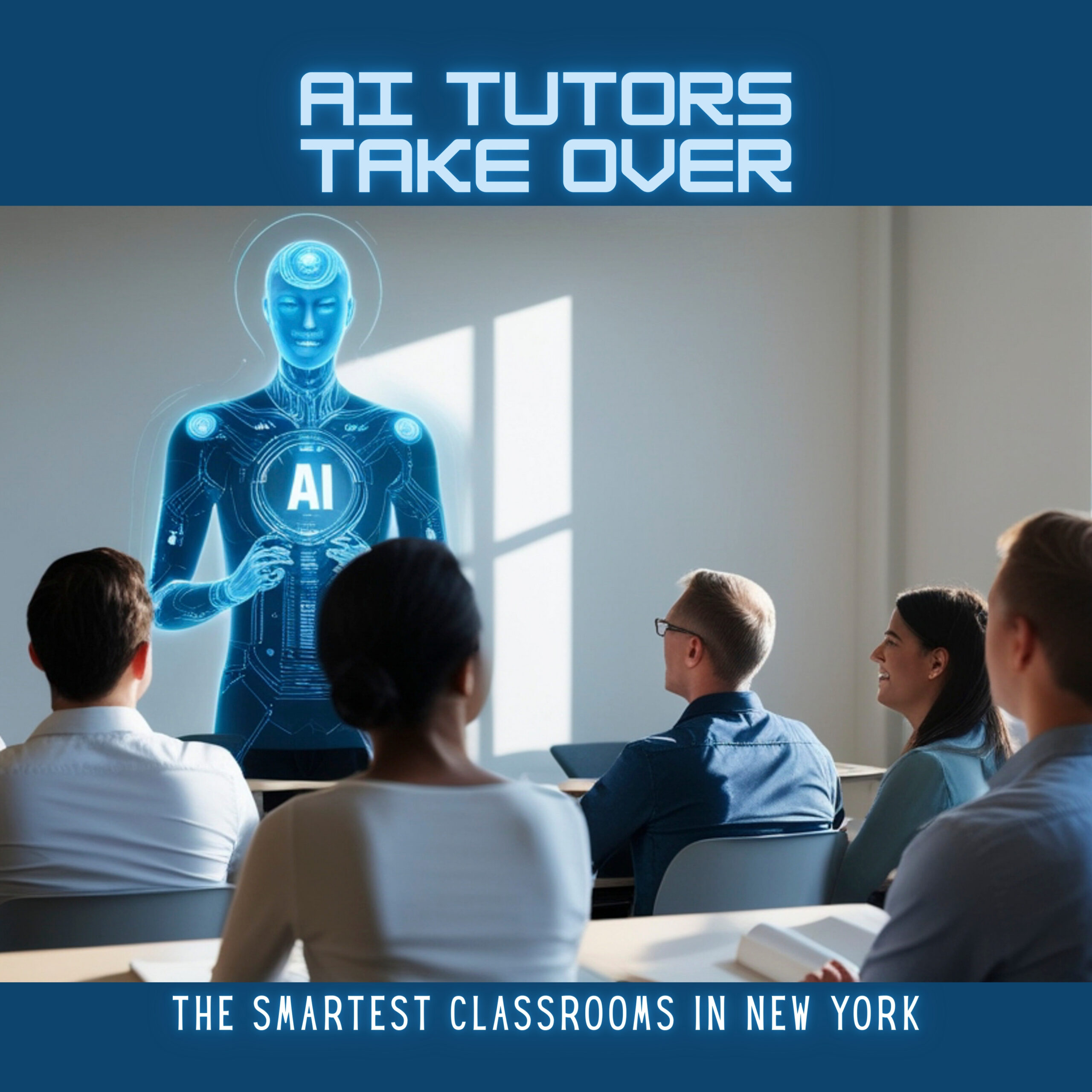
By AI Tutors Take Over: The Smartest Classrooms in New York
How artificial intelligence is reshaping learning for every student across the city.
The New Teacher in Town
In a Brooklyn public school, students gather around glowing screens as a calm voice answers their math questions. It’s not their teacher. It’s an AI tutor, a digital helper trained to guide, explain, and even encourage students who need extra help.
Across New York City, schools are quietly welcoming these smart tutors into classrooms. They don’t replace teachers, they support them. From helping a struggling reader in the Bronx to explaining algebra in Queens, AI is changing how kids learn.
The Rise of the Digital Tutor
AI tutors aren’t just science fiction anymore. According to a report by The New York State Education Department, nearly 35% of public schools in the state have started testing some form of AI-based learning tools in 2025. These tools range from simple chatbots to advanced learning systems that can read a student’s progress in real time.
Global spending on AI in education is expected to reach $25.7 billion by 2030, says a MarketsandMarkets study. The reason? AI can adapt lessons to each child’s level, something human teachers wish they had more time to do.
Teachers across New York say AI tutors have helped reduce their workload. “It’s like having a co-teacher who never gets tired,” said Maria Gonzalez, a 5th-grade teacher in Manhattan.
“I can finally focus on creativity while the AI handles basic practice questions.”
What Makes an AI Tutor So Smart?
AI tutors don’t teach like humans. They learn how students learn.
When a student answers a question wrong, the system doesn’t just mark it as wrong, it tries to understand why. Maybe the student rushed. Maybe they didn’t understand a key word. The AI adjusts the next question or shows a new example until the concept is clear.
Platforms like Khanmigo by Khan Academy and Duolingo’s GPT-4 powered AI tutor already use similar models. These systems are now being tested in several New York schools through small pilot programs.
Dr. Hannah Lee, a tech researcher at NYU, explained, “AI tutoring is not about giving students the right answer. It’s about teaching them how to think through the problem. That’s where the magic happens.”
A Day in an AI Classroom
Walk into a smart classroom in Staten Island, and you’ll see something different. Students wear small headsets and use interactive screens. They can ask questions out loud. The AI tutor answers in seconds.
Teachers can track everything from a central dashboard, which students are stuck, who needs more time, and who is ready for the next topic.
“It’s like having 30 personalized lessons going on at once,” said Principal James Porter from PS 241 in Brooklyn. “No child gets left behind, and no one gets bored waiting for others to catch up.”
AI tutors also help children with special needs. For example, voice-based tutors can read text aloud for visually impaired students or provide calming feedback for kids with ADHD.
But Not Everyone Is Happy
While the city celebrates its “smart classrooms,” not all parents are convinced. Some worry that too much screen time will make kids less social. Others fear privacy issues, where does all that student data go?
A recent Pew Research survey found that 69% of parents in the U.S. are concerned about how AI collects and stores information about their children.
The New York Department of Education says all AI programs must pass strict data protection checks. “Student privacy is non-negotiable,” said a spokesperson. “We’re building digital learning responsibly.”
The Human Touch Still Matters
Teachers say that even the smartest AI can’t replace real human connection. Kids still need empathy, encouragement, and laughter; things no machine can fake.
“AI can help with homework,” said Ms. Gonzalez, “but it can’t give a high-five when a kid finally gets it right.”
Experts agree that the best classrooms will use a mix of both, the emotional power of teachers and the precision of technology.
Impact on New York’s Education Future
The impact of AI on education could be massive. With around 1.1 million students in the New York City public school system, even small improvements can make a huge difference.
If AI tools can help raise student performance by just 10%, city officials estimate it could save millions in remedial education costs and boost graduation rates.
AI tutors are also leveling the playing field. Wealthy students have long had access to private tutors. Now, thanks to technology, personalized help can reach every student, even those in underfunded districts.
Jobs, Training, and the New Role of Teachers
As AI takes over repetitive teaching tasks, teachers in New York are being trained to work with these systems.
In 2025, the city announced a $45 million Teacher Tech Training Program, giving every educator access to workshops on AI tools. The program aims to prepare teachers for the “co-teaching era,” where humans and AI share the classroom.
“AI will never replace teachers,” said Dr. Lee from NYU. “But teachers who use AI will replace those who don’t”
Ethan Morales, a 9th-grade student at a Bronx charter school, shared his experience:
“I used to be scared of math. But my AI tutor breaks problems into small steps. It even cheers me up when I get stuck. Now I actually enjoy learning.”
This shows what AI can do when used right, not just teach lessons, but build confidence.
The Bigger Picture
New York is not alone. Cities like Boston, Los Angeles, and Chicago are testing similar programs. But New York’s scale, with over 1,800 schools makes it a leader in the national experiment.
The city’s education board has even hinted at a future “AI Education Hub,” where schools can share tools, data, and success stories. It could make New York a global example of smart learning done right.
The Road Ahead
As AI becomes more common in classrooms, the big question remains: How far should it go?
Should students write essays with AI help? Should tests be graded by algorithms? Should teachers rely on digital dashboards instead of instinct?
These questions don’t have easy answers. But one thing is clear, the classroom of the future is already here, and it’s powered by code and care working side by side.
Final Thought
AI tutors may be the new stars of New York’s schools, but teachers are still the heart. Together, they might create something powerful, a city where every child, no matter where they live, can learn smarter and dream bigger.
The smartest classrooms in New York are not just about technology. They’re about giving every student a fair chance to shine.
And as one student put it best: “It’s like having a teacher who’s always there, even after the bell rings.”
Reporting by The Daily Newyorks Staff.