
 By
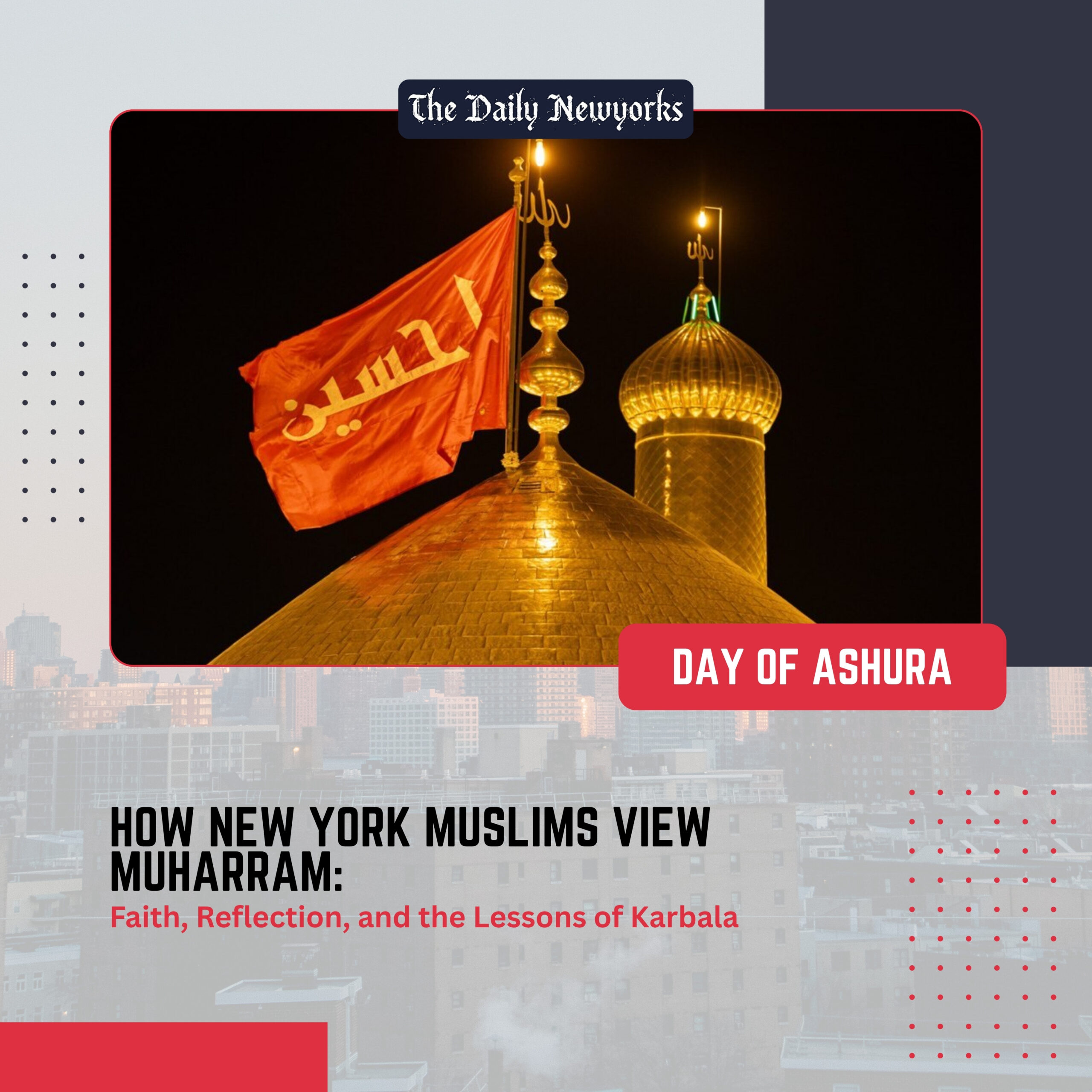
By How New York Muslims View Muharram: Faith, Reflection, and the Lessons of Karbala
In a city that never stops moving, Muharram invites many Muslims to slow down.
Amid packed subway rides, demanding careers, rising living costs, and the constant rhythm of New York life, the arrival of Muharram offers something different.
A moment of reflection.
A moment of remembrance.
A moment to reconnect with values that have inspired generations for more than thirteen centuries.
For Muslims across New York, Muharram is not simply the beginning of a new Islamic year.
It is a sacred month rooted in faith, history, and community.
Most importantly, it is a time to remember the legacy of Imam Hussain and the events of Karbala, a story that continues to shape how many people think about justice, sacrifice, leadership, and resilience.
From Brooklyn and Queens to the Bronx, Manhattan, and Staten Island, Muslims from diverse backgrounds observe Muharram in different ways.
Yet they remain united by a shared commitment to remembering one of the most powerful chapters in Islamic history.
The question is not simply how New York Muslims observe Muharram.
The deeper question is why the lessons of Karbala continue to resonate in one of the world’s most modern and multicultural cities.
New York’s Growing Muslim Community
To understand Muharram in New York, it is important to understand the city’s Muslim population.
New York is home to one of the largest Muslim communities in the United States.
Various estimates suggest that more than one million Muslims live throughout New York City and the surrounding metropolitan region.
The community reflects the diversity that defines New York itself.
Families from
- Pakistan
- Bangladesh
- India
- Egypt
- Turkey
- Nigeria
- Afghanistan
- Indonesia
And dozens of other countries have established vibrant communities across the city.
Today, hundreds of mosques, Islamic centers, schools, and community organizations serve Muslims throughout the five boroughs.
This diversity means Muharram may be observed through different cultural traditions.
But the message remains the same.
Remembering Karbala. Reflecting on faith. And learning from the example of Imam Hussain.
What Is Muharram?
Muharram is the first month of the Islamic calendar and is considered one of Islam’s four sacred months.
For Muslims worldwide, the month carries profound religious significance.
The most important day within Muharram is Ashura, observed on the tenth day of the month.
For many Muslims, Ashura serves as a time of remembrance, prayer, reflection, and spiritual growth.
Its significance is deeply connected to one of the most influential events in Islamic history.
The Battle of Karbala.
The Historical Significance of Karbala
The Battle of Karbala took place in 680 CE in present-day Iraq.
It was there that Imam Hussain, the grandson of Prophet Muhammad, faced the forces of Yazid.
Despite being vastly outnumbered, Imam Hussain refused to support what he viewed as an unjust and corrupt leadership.
His stand was not motivated by political power.
It was rooted in principle.
- Justice
- Truth
- Integrity
The events of Karbala ultimately led to the martyrdom of Imam Hussain and many of his companions.
Yet their sacrifice transformed Karbala into a symbol that continues to inspire millions around the world.
More than thirteen centuries later, the lessons of Karbala remain remarkably relevant.
How Muslims Across New York Observe Muharram
Throughout New York City, Muharram is observed through a combination of worship, education, community gatherings, and charitable initiatives.
Mosques and Islamic centers organize special programs focused on understanding the historical significance of Karbala and its relevance to modern life.
- For many families, Muharram is a time for learning
- Parents teach children about Islamic history
- Community leaders host educational sessions
- Religious scholars discuss the values demonstrated by Imam Hussain
The goal is not simply to remember history.
The goal is to understand how its lessons can be applied today.
Religious Gatherings and Educational Programs
Across New York, Islamic centers host:
- Religious lectures
- Community discussions
- Educational seminars
- Youth programs
- Faith-based workshops
Attendance often increases during Muharram as families seek opportunities to learn more about Islamic history and spirituality.
These gatherings strengthen community bonds while preserving traditions that have been passed down for generations.
Reflection and Spiritual Growth
For many Muslims, Muharram is also deeply personal.
It is a time to reflect on character, priorities, and faith.
Questions often emerge.
- Am I living according to my values?
- Am I helping others?
- Am I standing for what is right?
The story of Karbala encourages believers to evaluate not only what they believe but how they act.
Acts of Charity and Community Service
One of the most visible aspects of Muharram in New York is community service.
Many organizations use the month as an opportunity to support vulnerable populations through:
- Food distribution programs
- Community kitchens
- Donation drives
- Volunteer initiatives
- Homeless outreach efforts
For many participants, helping others is one of the most meaningful ways to honor the legacy of Imam Hussain.
Why Younger Muslims Are Connecting With Muharram
A growing number of younger Muslims are exploring the lessons of Karbala through a modern lens.
Social media.Podcasts. Online lectures. Educational content.
Digital platforms have made Islamic history more accessible than ever before.
Many young New Yorkers view Karbala as more than a historical event.
They see it as a source of guidance for navigating contemporary challenges.
Topics such as:
- Social justice
- Ethical leadership
- Community activism
- Mental resilience
- Personal integrity
are increasingly discussed through the framework of Karbala’s teachings.
This connection has helped a new generation discover relevance in events that occurred more than thirteen centuries ago.
Why the Lessons of Karbala Still Matter Today
History matters when its lessons remain useful.
That is one reason Karbala continues to resonate.
The story addresses challenges that people still face today.
- Power and accountability
- Justice and oppression
- Truth and convenience
- Leadership and responsibility
These themes remain as relevant in modern New York as they were centuries ago.
Choosing Principles Over Comfort
One of Karbala’s central lessons is that values should not be compromised for convenience.
Imam Hussain chose principle over personal safety.
Truth over silence.
Integrity over compromise.
For many Muslims, this lesson serves as a reminder that ethical decisions often require courage.
Standing Against Injustice
The story of Karbala is frequently viewed as a stand against oppression.
In modern society, this lesson inspires people to challenge discrimination, exploitation, and unfair treatment.
Whether in schools, workplaces, or public institutions, the message remains consistent.
Silence should never become acceptance.
Applying Karbala’s Lessons in Modern New York
New York presents unique challenges.
It is one of the world’s most competitive cities. It is also one of its most expensive.
Housing costs continue to rise. Economic pressures affect working families. Professional demands can be overwhelming.
Against this backdrop, many Muslims find guidance in the values associated with Muharram.
Speaking Truth to Power
The lesson of standing for what is right remains highly relevant in professional and public life.
Many New Yorkers see Karbala as a reminder to maintain integrity even when facing pressure.
Supporting Vulnerable Communities
The values of compassion and service encourage support for individuals experiencing hardship.
Community care remains a core part of many Muharram observances.
Building Resilience During Difficult Times
The followers of Imam Hussain endured extraordinary hardship with patience and dignity.
For many New Yorkers facing economic uncertainty and personal challenges, that resilience remains a powerful example.
Muharram’s Message Beyond the Muslim Community
The story of Karbala transcends religious boundaries.
Its themes are universal.
- Courage
- Justice
- Sacrifice
- Compassion
- Integrity
These values continue to inspire people from diverse backgrounds around the world.
That universal appeal helps explain why Karbala remains one of history’s most enduring stories of moral courage.
Final Thoughts
Muharram is more than a date on the Islamic calendar.
For many Muslims across New York, it is a time to reconnect with faith, strengthen community ties, and reflect on values that remain relevant in today’s world.
The lessons of Karbala continue to remind people that character matters.
Integrity matters. Compassion matters. And standing for truth matters.
More than thirteen centuries after the events of Karbala, the message of Imam Hussain continues to inspire millions.
Even in a city that never sleeps.
Reporting by The Daily Newyorks Staff.