
 By
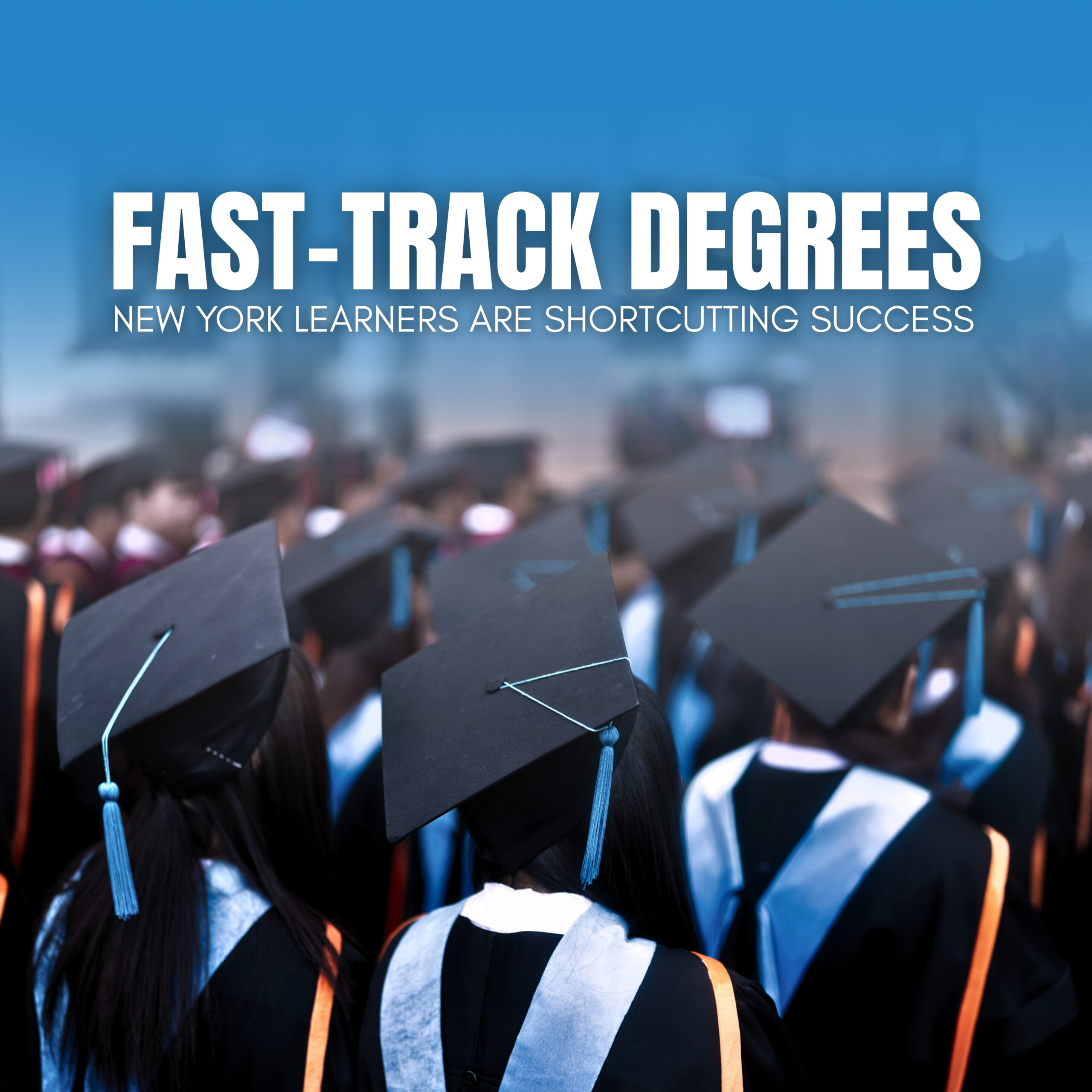
By Fast-Track Degrees: How New York Learners Are Shortcutting Success
More New Yorkers are racing through college with fast-track degrees, aiming to save time, money, and reach the job market quicker than ever before.
The New Education Rush
On a sunny morning in Brooklyn, 22-year-old Maya Lopez walked across the stage at her graduation, two years earlier than expected. “I just didn’t want to wait,” she said with a smile. Maya is part of a growing group of students in New York choosing fast-track degrees to reach success faster.
Across the state, universities are offering shorter and more flexible programs. The goal is simple, help students earn degrees in less time and with less debt. For many young New Yorkers, that’s the kind of deal worth running for.
What Are Fast-Track Degrees?
Fast-track or accelerated degree programs let students finish a bachelor’s or master’s degree in less time than usual. For example, a bachelor’s degree that usually takes four years can be completed in just two or three.
Colleges like New York University (NYU) and Stony Brook University now offer combined programs where students earn both bachelor’s and master’s degrees together. These programs are becoming more popular because they promise quick results and lower costs.
According to a 2024 report by the National Center for Education Statistics (NCES), nearly 1 in 5 U.S. college students are now enrolled in accelerated or online hybrid programs (source). That number is even higher in New York, where city life moves at lightning speed.
Why the Rush?
New Yorkers are known for moving fast, and education is no different. The rising cost of living, student debt, and a changing job market have made many rethink traditional college paths.
The average student debt in New York is about $37,000, according to the Federal Reserve Bank of New York (source). That’s a big reason students are choosing programs that help them graduate sooner and start earning earlier.
“Time is money, especially in this city,” says Professor Helen Grant from the City University of New York (CUNY). “Fast-track degrees are a practical way for students to keep up with New York’s pace and pressure.”
The Digital Edge
Technology has played a big part in this shift. With online learning, flexible class hours, and credit transfers, students can now build schedules around work and family.
During the pandemic, remote classes showed that learning doesn’t always need a classroom. Now, New York’s top schools are blending online and on-campus lessons.
Columbia University’s new Accelerated Master’s Pathway allows students to earn their degree in just 12 months by taking digital modules and weekend workshops.
A 2023 Pew Research Center study found that 59% of U.S. adults believe online education now provides equal or better value than traditional college learning (source). That belief has helped fast-track programs gain serious respect.
Local Colleges Join the Race
From Manhattan to Buffalo, more New York institutions are joining the fast-track wave.
- NYU offers an “Express Path” business degree where students can graduate in three years.
- SUNY Albany has a “3+2” program that combines undergraduate and graduate studies for engineering students.
- Fordham University runs summer and winter mini-semesters to help learners finish early.
The state’s Higher Education Services Corporation (HESC) even provides financial support for students taking extra credits per semester, encouraging speed without sacrificing quality.
The Catch: Is Faster Always Better?
While the idea of finishing early sounds great, experts warn it’s not for everyone.
Accelerated programs are intense. Students must handle more coursework in shorter time frames. “You need focus and discipline,” says Dr. Raymond Liu, an education advisor at Hunter College. “It’s like running a marathon at sprint speed.”
Some students also worry that shorter programs mean fewer experiences, less campus life, fewer internships, and limited time to explore interests.
Still, for those who can handle the pressure, the rewards are clear. Early graduates save thousands in tuition and can start working sooner, which means more years of earning and less time in debt.
The Economic Ripple
Fast-track degrees aren’t just changing student lives, they’re reshaping the local economy.
When students enter the workforce earlier, they boost productivity and fill job gaps faster. New York’s tech, finance, and healthcare sectors are already benefiting.
A 2024 report by the New York State Department of Labor shows a growing demand for skilled workers in data analytics, nursing, and software engineering (source). Many fast-track graduates are jumping right into these roles.
In fact, the report noted that graduates from accelerated programs find jobs 15% faster than those from traditional degrees. That’s a big plus in a city where time often equals opportunity.
What New Yorkers Are Saying
For many, the new education model feels like a natural step forward.
“I finished my accounting degree in three years and started my career right away,” says Kevin Morales, a 24-year-old from Queens. “Now I’m earning while my friends are still in class.”
Education experts, too, see this as a sign of progress.
“New York has always been a hub of innovation,” says Dean Laura Simmons of Pace University. “Fast-track learning fits perfectly with the city’s drive and ambition.”
Still, she adds a note of caution:
“Speed should not come at the cost of depth. The goal is smarter learning, not just faster learning.”
What’s Next for New York Education?
The trend is expected to grow. More universities are designing flexible and hybrid learning paths. Employers are also recognizing the value of these graduates, focusing more on skills than the time spent in school.
Some education analysts predict that by 2030, one-third of all New York college programs will include an accelerated or hybrid model (source).
That means the next wave of learners will face more choices, faster routes, cheaper options, and more career control than ever before.
The Final Word
New York has always been a city of speed: in business, fashion, and now education. Fast-track degrees reflect that spirit.
They promise quicker success, less debt, and a head start in the race of life. But like any shortcut, they require balance and care.
So the question for every New York learner remains: How fast is too fast?
Because in the city that never sleeps, even education is learning to keep up.
Reporting by The Daily Newyorks Staff.