
 By
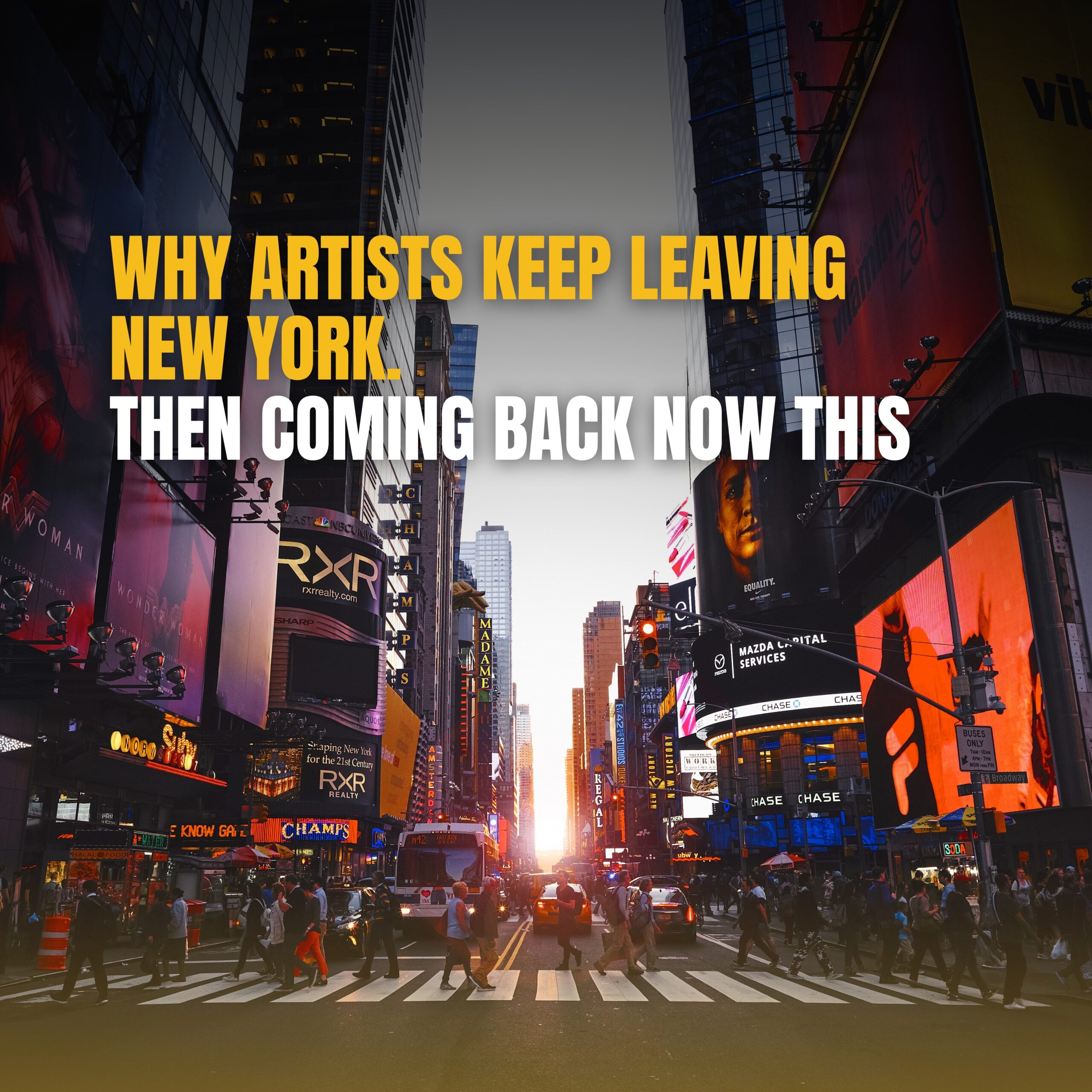
By Why Artists Keep Leaving New York, Then Coming Back
New York’s housing squeeze is testing creativity, community, and patience, will action catch up before the crisis does?
A City on Tightly Packed Ground
Last week in Queens, a young family shared a one-bedroom apartment with four others. Six people, one room, little space to breathe. That’s life for many New Yorkers right now.
New York City’s rental vacancy rate stood at just 1.4% in 2023 , the lowest since the 1960s, according to the NYC Comptroller’s Office. In simple terms, there are almost no homes available to rent. The housing supply is so tight that people wait months, even years, to find a decent place. Families grow, but their space doesn’t.
And it’s not just families who are squeezed. Artists, musicians, and young creatives, once the soul of New York’s neighborhoods are being priced out, again.
They leave for cheaper cities like Philadelphia, Detroit, or Austin. Then somehow, they come back. Why? Because New York still holds the promise of possibility. But that promise is fading under rent receipts.
The Core Problem: Too Few Homes, Too Many People
For years, New York has built far fewer homes than the number of people moving in or the jobs created. From 2010 to 2023, housing grew only 4%, while jobs jumped 22%, according to Wikipedia.
That mismatch drives prices up and choices down. The 1.4% vacancy rate means almost every livable apartment is already taken.
As rents rise, even those earning steady incomes feel the strain. In 2022, about 38.9% of households in New York State were “cost-burdened,” meaning they spent 30% or more of their income on housing, according to the Office of the New York State Comptroller.
For New York City renters, that number climbs to over 52%. More than half the city’s renters are spending too much just to stay put.
A National Low Income Housing Coalition poll showed that 73% of New Yorkers see housing affordability as a “major problem.”
Hidden Stress: Overcrowding and Inertia
More than 170,000 households in the city are “severely overcrowded,” with 1.5 or more people per room, reports the Citizens Budget Commission.
That means families sleeping in living rooms. Children doing homework on kitchen tables. Privacy, gone.
Meanwhile, others are stuck in rent-stabilized apartments they’ve outgrown because moving means paying double. The result? Stagnation. Fewer vacancies. Less mobility.
This hidden pressure creates stress that doesn’t show up in housing reports, but it’s felt in every cramped home.
Why Artists Keep Leaving
Artists have always been the city’s early settlers. They move into rough neighborhoods, fill them with color and culture, and give them character. Then, rents rise, and they’re pushed out.
It’s a cycle that never ends. From SoHo to Williamsburg, from Bushwick to the Bronx, creative spaces become expensive addresses.
“Art thrives on freedom, not fear of rent,” says Leah Mendes, a Brooklyn-based painter now living in Newark. “You can’t paint when you’re worried about eviction.”
For many artists, New York is both a muse and a monster, full of energy but impossible to afford. They leave for breathing room, cheaper studios, and a bit of peace. But they also come back, drawn by the pulse that no other city can match.
“I left for three years,” says Marcus Lee, a jazz musician who returned from Chicago. “But every tune I played sounded like New York. You can’t escape the rhythm of this city.”
Why It Matters
Housing isn’t just about roofs and walls, it’s about keeping talent, families, and the economy alive.
When housing costs skyrocket:
- Families spend less on food, healthcare, and education.
- Businesses struggle to hire workers who can’t afford to live near jobs.
- The city loses its diversity and creativity.
The Citizens Budget Commission says housing underproduction led to a loss of 160,000 residents in 2022. Many of them were working-class families and artists, the very people who make New York feel like New York.
Overcrowded homes also mean higher health risks and mental stress, warns the NYC Department of Health.
If the city can’t keep people housed safely and affordably, it risks losing not just population, but identity.
What’s Being Tried
Officials know the crisis is deepening, and they’re trying to act.
In 2024, the city financed 2,825 affordable units for the very lowest-income households, the highest number ever recorded, reports the New York Housing Conference.
Zoning reforms aim to make it easier to build near subways and high-density areas. Tenant protections are being expanded.
But progress is slow. Permits get stuck. Developers hesitate. And every year the shortage grows.
Experts warn that “the gap between demand and supply is massive, and growing larger,” according to the Citizens Budget Commission.
How New Yorkers Feel It
Maria, a single mother in the Bronx, says she spends half her income on rent.
“I work full-time. Still, I feel stuck,” she says quietly. “I can’t save. I can’t move.”
In Manhattan, a young couple gave up on buying after seeing even the smallest apartment listed for prices they could never reach.
These stories repeat across boroughs, different names, same struggle.
When homes are unaffordable, everything else gets harder: the commute, the stress, the dreams. Children grow up in crowded spaces. Workers leave the city. And creativity, that spark that defines New York, dims a little each time someone leaves.
The Path Ahead: Fix It Before It Breaks
Can New York turn this around? Experts say yes, if the city acts fast.
Key steps:
- Build more homes for low- and middle-income families.
- Protect affordability so new buildings don’t only serve the wealthy.
- Encourage mobility so housing fits real family needs.
- Spread growth fairly across all neighborhoods.
Dr. Helen Zhou, an urban policy researcher, says it plainly:
“If production stays too low and costs too high, New York will lose what makes it great, its people.”
My Opinion:
New York has always been a city of dreams. But dreams need space.
The housing crisis isn’t just about rent, it’s about who gets to belong here. Artists, nurses, teachers, and families shouldn’t have to choose between survival and staying in the city they love.
The question now isn’t whether New York will change. It’s whether it will change fast enough to keep its creative heart beating.
Will the city act before the cost becomes too high, or will the dreamers who built New York keep leaving, one by one, until there’s no one left to come back?
Reporting by The Daily Newyorks Staff Writer.