
 By
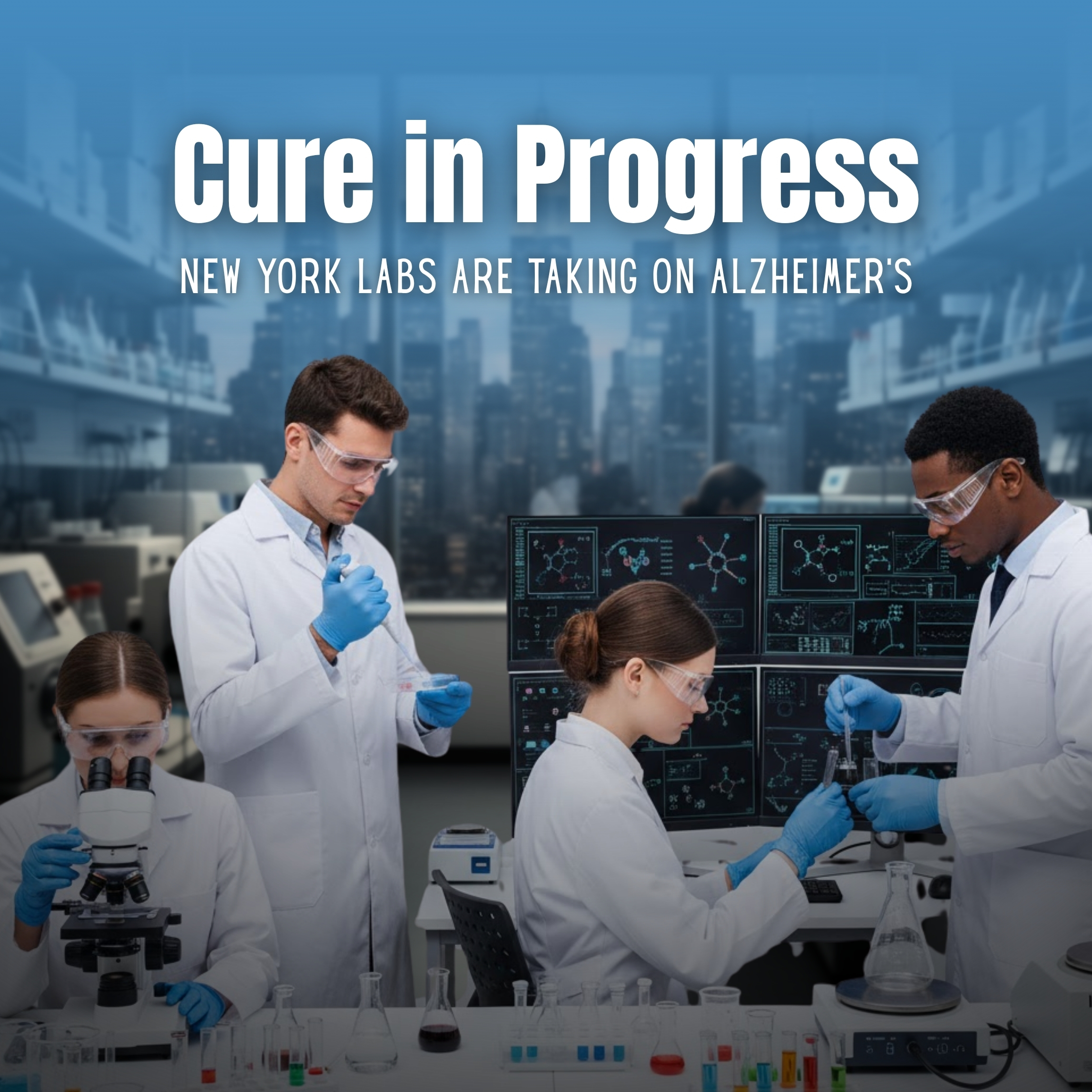
By Cure in Progress: How New York Labs Are Taking on Alzheimer’s
Inside the city’s race to slow one of the world’s most feared brain diseases.
A Breakthrough Moment in the City That Never Sleeps
In a quiet lab at Columbia University, a team of scientists might be getting closer to something many families have waited decades for ,a real step toward stopping Alzheimer’s disease.
New York City, known for its speed and chaos, is now leading a calm but powerful fight inside its research labs. From Manhattan to Long Island, local scientists are testing new treatments that could slow or even prevent the brain’s decline.
More than 410,000 New Yorkers are living with Alzheimer’s today, according to the Alzheimer’s Association. That number is growing fast as the population ages, making it one of the biggest health challenges in the state.
Inside New York’s Alzheimer’s Research Push
At Columbia’s Taub Institute, researchers are studying how brain cells break down over time , and how to protect them. Across the East River, scientists at NYU Langone are using AI to detect early signs of memory loss years before symptoms appear.
“We’re not just studying the disease. We’re chasing ways to stop it,” said Dr. Maria Sanchez, a neurologist leading trials at Columbia.
“Each new test helps us understand how the brain fights back.”
The state’s support for medical research has also grown. In 2024, New York invested over $25 million in Alzheimer’s research and caregiver programs, part of a larger national effort to find a cure.
The Human Cost Behind the Science
Behind every lab door is a story that hits close to home. In Queens, 68-year-old Janet Miller visits her husband every week at a memory care center. “He still remembers my name on good days,” she said.
“I just hope these new drugs give families more of those days.”
Her words echo across thousands of homes in New York. Alzheimer’s doesn’t only affect patients , it changes entire families.
According to the Centers for Disease Control and Prevention (CDC), Alzheimer’s is now the fifth leading cause of death among Americans over 65. And without major breakthroughs, the number of people affected could triple by 2060.
New Drugs, New Hope
The Food and Drug Administration (FDA) recently approved two drugs, Leqembi and Donanemab, that show progress in slowing early Alzheimer’s symptoms. Both are being tested and studied by research teams in New York hospitals.
“These are not cures,” said Dr. Raymond Li, a neuroscientist at NYU Langone.
“But they show us that slowing the disease is possible , and that means hope.”
New York labs are also exploring non-drug options , from gene therapy to brain stimulation ,and using AI to find patterns in massive data sets that humans might miss.
Why It Matters for New Yorkers
The city’s growing Alzheimer’s challenge isn’t just a health issue. It’s an economic one too. The Alzheimer’s Association reports that unpaid caregivers in New York provided over 900 million hours of care last year, valued at nearly $19 billion
These numbers show how urgent the fight has become. If even one new treatment can delay the disease by a few years, it could save billions , and give thousands of New Yorkers more time with their loved ones.
For the city’s hospitals and biotech startups, Alzheimer’s research also means jobs, innovation, and global attention.
“New York has always been a hub for science,” said Dr. Sanchez. “Now, it’s becoming a hub for hope.”
A City Fighting for Memory
Every step forward , every new test, every volunteer, every lab breakthrough, brings the city closer to answers that once felt impossible.
Families across the five boroughs are waiting, watching, and believing that one day, the cure might come from right here , from a lab that never stops working.
As Dr. Li put it,
“The brain remembers. And so do we. We won’t stop until it’s free from this disease.”
New York’s labs are turning quiet research into powerful hope. The fight against Alzheimer’s is far from over , but in the city that never sleeps, science isn’t resting either.
Reporting by The Daily Newyorks Staff Writer.