
 By
By Pandemic Watch: How New York Researchers Are Preparing for the Next Outbreak
Subhead: From high-tech labs in Manhattan to field testing in Albany, New York scientists are quietly building defenses against the next global health threat.
The Next Battle Begins in New York
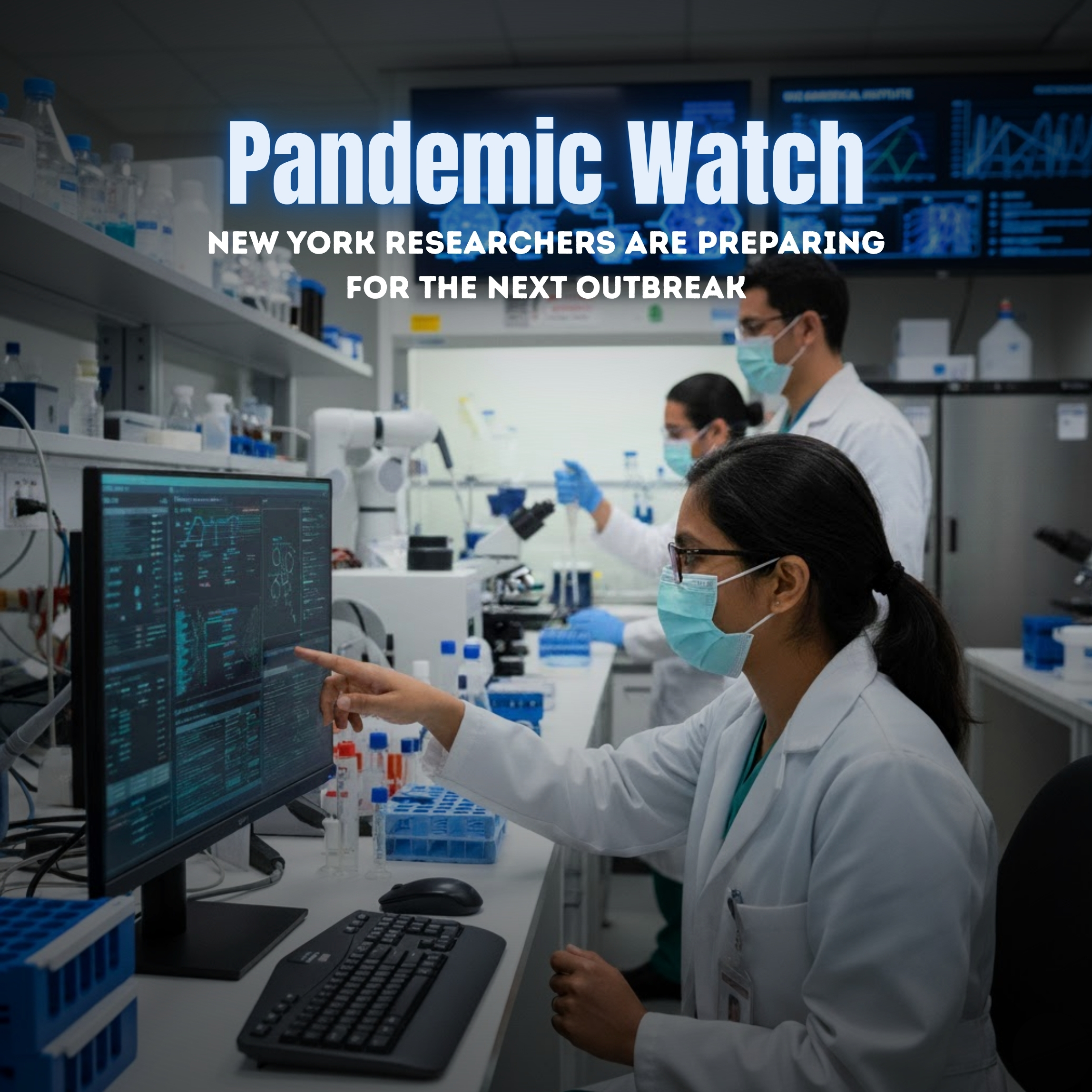
At a lab tucked inside Columbia University, researchers aren’t waiting for another virus to strike , they’re already preparing for it. Lessons from COVID-19 still echo through New York’s hospitals and streets. Now, scientists, health experts, and city leaders are working together to make sure the city never faces a crisis like that again.
Dr. Laura Kim, a public health expert at NYU, says,
“It’s not about if another pandemic happens , it’s about when. And this time, we want to be ready before it starts.”
Building Smarter Systems
Since 2020, New York has invested millions into pandemic prevention research. The state’s Department of Health launched a new “Disease Early Warning Network” that tracks virus patterns through wastewater and hospital data. According to the CDC, wastewater testing can detect viruses up to seven days before clinical testing does (CDC, 2024).
Columbia University’s Center for Infection and Immunity is leading several projects to identify unknown viruses before they spread. The team uses AI tools to scan animal samples and predict which viruses could jump to humans next , a key factor that could have stopped COVID-19 early on.
Dr. Ian Lipkin, one of the world’s top virus hunters, said in a recent interview.
“New York is turning science into a shield. The faster we detect, the faster we protect.”
From Labs to Local Streets
This new wave of preparation isn’t just happening in labs. New York City’s health department is training rapid-response teams to handle future outbreaks in schools, airports, and crowded neighborhoods.
According to the New York State Health Department, over 2,000 health workers have received special pandemic training since 2023. Hospitals across the state are also upgrading air filtration systems and keeping emergency stockpiles of medical gear.
And it’s not only government agencies stepping in. Private companies and universities are forming alliances to test new vaccines and share data faster. The City University of New York (CUNY) recently launched a program that connects biology students with local hospitals to study new virus strains.
Lessons from COVID Still Shape Every Step
When the first COVID-19 wave hit in 2020, New York was one of the hardest-hit cities in the world. More than 62,000 lives were lost across the state (NYC Health, 2024). That painful history changed how researchers think about prevention.
Now, they’re focusing on speed. The goal is to spot early warning signs and respond within days, not months. Researchers are also working with the WHO to create “digital outbreak passports” , real-time systems that alert health authorities the moment a new virus appears in public databases.
How This Impacts New Yorkers
For everyday New Yorkers, all this preparation could mean a safer, faster response the next time a health threat appears. It also means fewer lockdowns, shorter hospital waits, and quicker access to medicine and vaccines.
Economically, prevention pays off too. A study by the World Bank found that every dollar spent on early detection saves up to $10 in future crisis response. That’s good news for taxpayers and business owners still recovering from the last pandemic.
Voices from the Frontline
Health worker Maria Torres, who served at Elmhurst Hospital during the COVID peak, says she finally feels hopeful.
“Back then, we were fighting blind,” Torres recalls. “Now, we have better tools, better data, and a plan. It’s comforting to know someone is watching the numbers before it’s too late.”
City officials agree. Deputy Mayor for Health and Human Services, Anne Williams-Isom, said during a recent press briefing.
“New York learned the hard way. But we also became stronger, smarter, and more united in facing whatever comes next.”
The Road Ahead
New York’s research efforts are far from over. The next steps include building faster vaccine production centers, expanding global virus surveillance partnerships, and launching community awareness campaigns.
Experts say that public education is just as important as science. People need to know how to respond early , from wearing masks to recognizing symptoms and trusting credible information.
Dr. Kim summed it up best:
“Preparedness starts before panic. And in New York, that’s already happening.”
As the world moves forward, New York stands as both a warning and a model. The city that once stood at the center of the storm is now helping build the radar that could save millions.
So, when the next outbreak comes , and experts say it will , New York aims to do more than survive. It plans to lead.
Reporting by The Daily Newyorks Staff Writer.