
 By
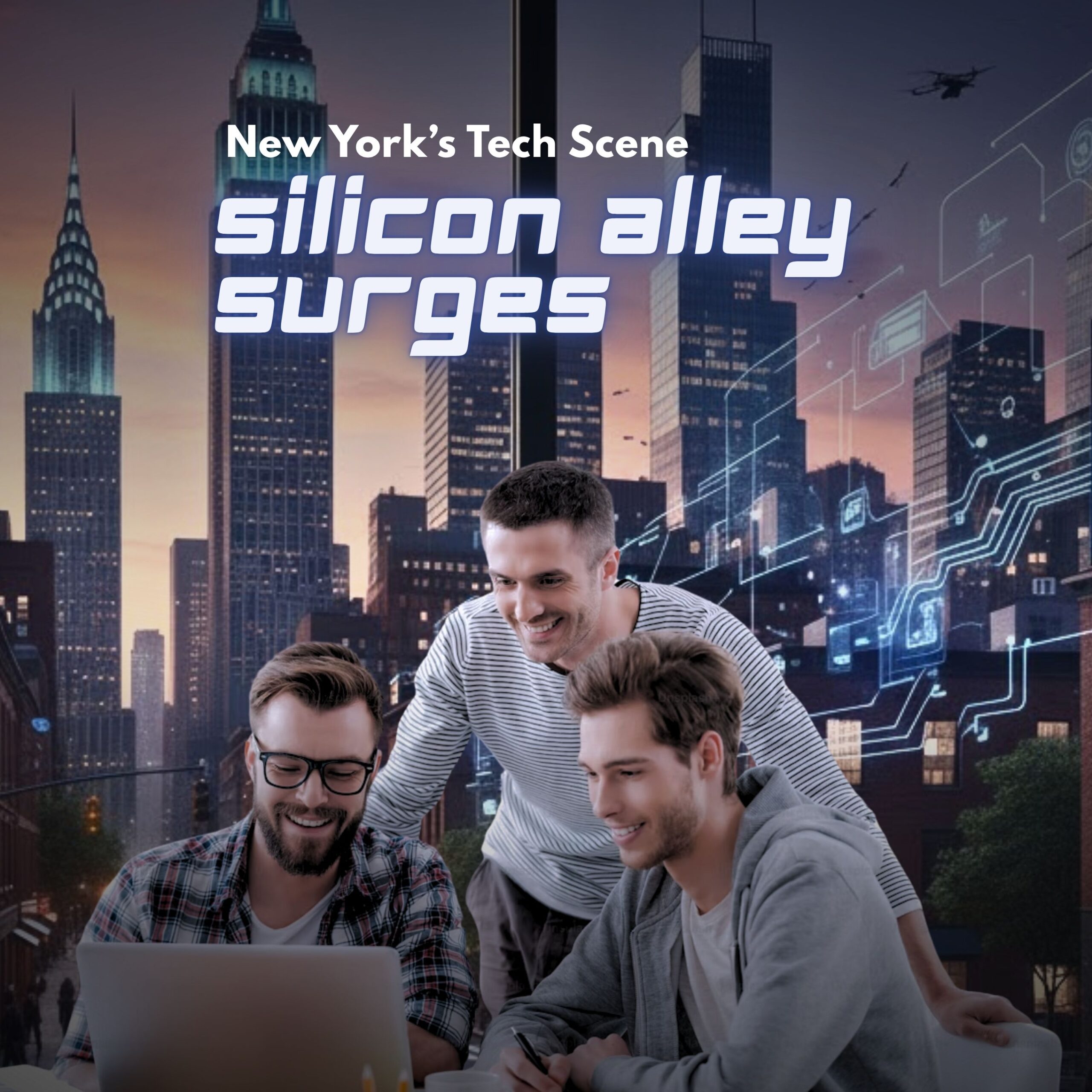
By Silicon Alley Surges: Why Startups Are Crowding Into New York’s Tech Scene
New York’s tech revival is rewriting the city’s business map, and startups are rushing in faster than ever before.
The city that never sleeps is now the city that never stops coding. From Brooklyn lofts to Midtown high-rises, New York’s tech scene is booming. Startups are popping up at record speed, turning “Silicon Alley” into one of the world’s fastest-growing innovation hubs.
Just last year, tech employment in New York grew by 7%, adding more than 17,000 new jobs according to the U.S. Bureau of Labor Statistics. Venture capital poured in too, with $28.4 billion invested in New York startups in 2024, second only to Silicon Valley, says Crunchbase.
From Wall Street to Web Street
For decades, Wall Street defined New York’s economy. Now, tech is sharing the spotlight.
Startups in fintech, AI, clean energy, and health tech are rewriting what it means to build a company in the Big Apple.
Many young founders say they’re drawn to New York because it’s not just a tech city, it’s a city that connects industries. Finance meets technology. Fashion meets data. Art meets AI.
“New York is where creativity and commerce collide,” says Lena Ortiz, co-founder of a Brooklyn-based AI design studio.
“You meet a banker, a filmmaker, and a coder, all in one coffee shop.”
This mix is what makes Silicon Alley so powerful. It’s not trying to be another Silicon Valley, it’s becoming its own version of tech success.
A Startup Scene Built on Real-World Problems
Startups in New York are tackling challenges that come from living in a real, busy city.
From delivery apps that manage traffic jams to AI tools helping small landlords handle rent payments, New York startups are building for the people around them.
According to Tech, there are now over 25,000 tech startups in the metro area, supporting 375,000 jobs and generating $147 billion in annual economic impact. That’s nearly 15% of the city’s entire economy.
Local universities are also feeding this growth. Columbia, NYU, and Cornell Tech are producing a steady flow of engineers and entrepreneurs. Programs like StartupNY and Empire State Development are helping founders launch with fewer costs and more support.
The Investors Have Arrived
When big investors show up, startups follow.
Major venture capital firms, once based in San Francisco, are opening offices in New York. Firms like Andreessen Horowitz and Sequoia Capital have been spotted scouting spaces in SoHo and Flatiron.
In 2024, more than 35% of all VC deals on the East Coast happened in New York City, according to CB Insights. That’s up from just 12% a decade ago.
And it’s not just the big firms. Angel investors, accelerators, and even celebrities are putting money into local startups. From Jay-Z’s Marcy Venture Partners to Serena Williams’ Serena Ventures, the city’s star power is helping build a new generation of entrepreneurs.
Why Founders Are Choosing New York Over California
It’s not just about money. It’s about mindset. Many young entrepreneurs say New York offers a different kind of energy, fast, bold, and diverse.
The cost of living is high, yes. Office space is tight. But founders say the benefits outweigh the challenges. They have access to clients, investors, and talent, all within a subway ride.
“Every day in New York feels like a pitch,” says Daniel Li, a fintech founder in Manhattan.
“You can meet your next investor in the elevator.”
Remote work has also changed the game. With hybrid setups, startups can hire from anywhere but still base their HQ in the city. This flexibility has drawn in both local and international companies.
Impact on the City
The startup boom is reshaping New York’s skyline and job market.
Neighborhoods like Flatiron, DUMBO, and Long Island City have become mini-tech districts. Old warehouses now house open offices and co-working spaces buzzing with developers, designers, and dreamers.
According to NYC Economic Development Corporation, tech jobs now pay an average salary of $172,000, nearly double the citywide average. That means more spending power for residents, and more growth for local businesses.
However, the rise of tech also brings challenges: higher rents, intense competition, and pressure on smaller local businesses to keep up.
Still, city leaders see the surge as a sign of strength.
“New York’s tech economy is now as vital as its finance or media industries,” said Maria Torres-Springer, NYC Deputy Mayor for Housing and Economic Development, in a recent statement.
Quote of the Day
“Silicon Alley isn’t just a place, it’s a pulse,” said Elliot Reeves, director of Tech. “It’s the rhythm of innovation that keeps this city alive and moving forward.”
What’s Next for Silicon Alley?
Experts say the next phase of growth will focus on AI, green tech, and digital infrastructure.
New York has already launched programs to support AI research and sustainable startups through city-backed funds.
Meanwhile, global tech companies are expanding local offices. Google has opened new spaces in Hudson Square, and Meta continues to grow in Midtown. Even Amazon, which once faced backlash over its HQ2 plans, is quietly increasing its New York presence.
As technology blends deeper into everyday life, from transport to health to entertainment . New York is positioning itself not just as a hub for startups, but as a global leader in digital transformation.
The City That Codes Together
The startup surge in New York isn’t slowing down. It’s changing how people work, live, and dream.
From small teams in coffee shops to billion-dollar unicorns in skyscrapers, Silicon Alley shows what happens when creativity meets grit.
As the city grows into its tech future, one thing is clear: New York isn’t trying to copy Silicon Valley. It’s building something uniquely its own, bold, diverse, and full of energy.
And for those who wonder where the next big idea will come from. They might just find it a few subway stops away.
Reporting by The Daily Newyorks Staff Writer.