
 By
By Hip-Hop Turns 50: New York Honors the Beat That Changed the World
From the Bronx to Broadway, the city pays tribute to the culture born in its streets.
It was an ordinary summer night in August 1973 in the Bronx when a party changed everything. At a back-to-school event at 1520 Sedgwick Ave., 18-year-old DJ Kool Herc spun extended beats that let young people dance and rhyme. That moment is often called the birth of hip-hop.
Fast-forward fifty years, and the sound that started in a South Bronx recreation room now pulses through New York’s streets, stages and screens.
A Simple Story: How the Beat Began
Hip-hop began as a way for young people in poor neighborhoods to speak up, have fun and feel seen. In the early 1970s, the Bronx was one of New York’s most troubled boroughs, with high poverty and few chances for youth.
The four key parts: DJing (spinning records), MCing (rhyming), break-dancing and graffiti writing, grew out of block parties, parks and subway cars.
What started locally quickly spread across New York City, then across America and the globe.
New York’s Role: Home of the Beat
New York didn’t just watch hip-hop happen, it was hip-hop. The city’s boroughs, especially the Bronx, gave the movement its roots. The building at 1520 Sedgwick Ave. is now often called the “birthplace of hip-hop”.
From subway graffiti to block-party moves to tagging trains, youth of New York made hip-hop visual and loud. The culture reflected the city’s noise, energy and struggle.
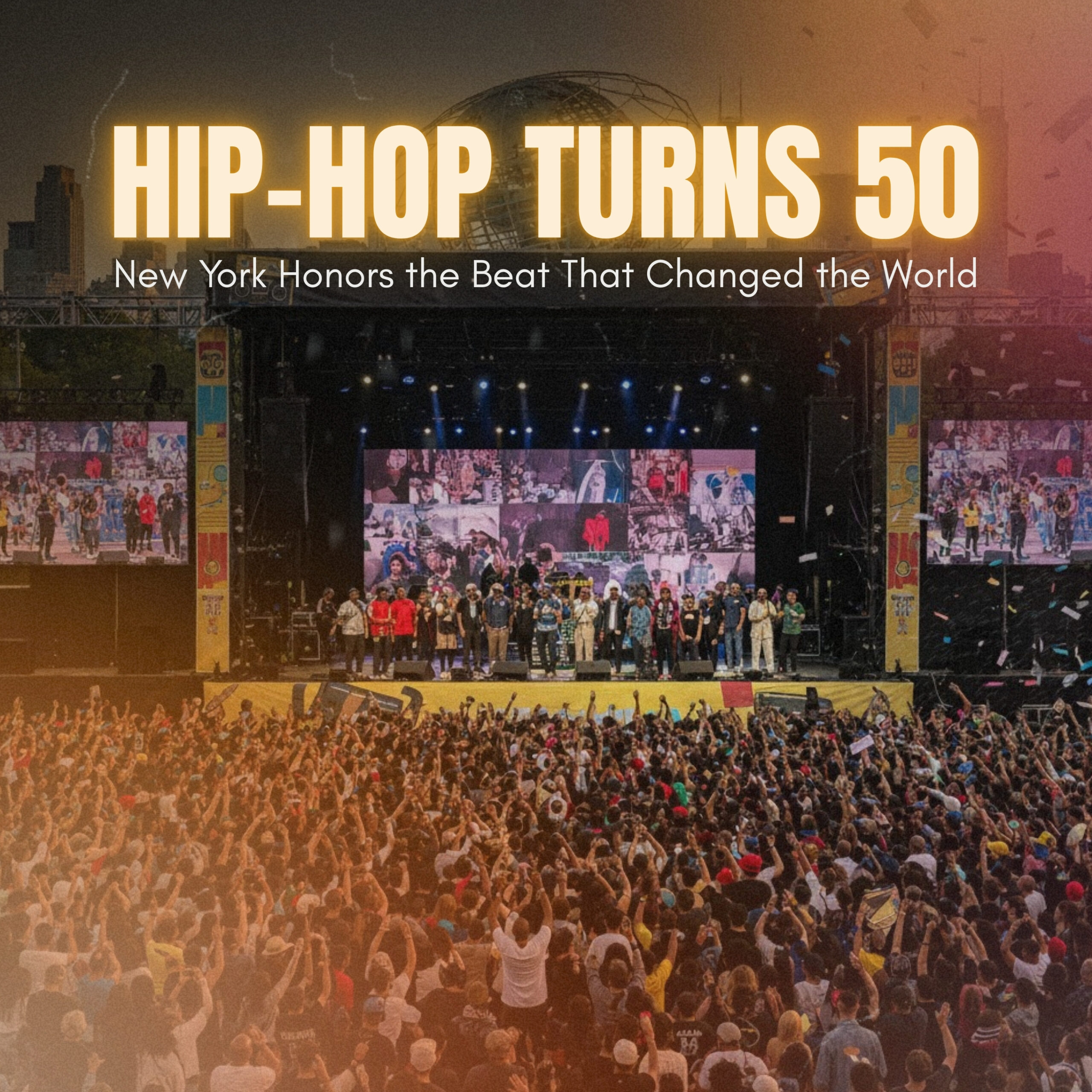
Today, New York hosts big concerts, festivals and museum plans to mark the 50-year milestone.
Big Numbers, Big Influence
The economic reach of hip-hop is massive. The genre drives a multi-billion-dollar business. For example, the global hip-hop industry is estimated at about US $16 billion.
Hip-hop is the most-listened-to music genre in the world today. In New York and beyond, the music created jobs in fashion, design, film, tech and marketing.
Celebrations in the City
New York is doing more than just turning up the volume. There are street parties, art exhibits, and talks that honour hip-hop’s legacy. Locally grown festivals like the Brooklyn Hip‑Hop Festival bring people together for music, dance and culture.
Even national leaders have joined the celebration: one major event called it “the ultimate American art form.”
In the Bronx, the upcoming Universal Hip Hop Museum (now branded “Hip Hop Museum”) is set to open in the coming years, offering a permanent home for the culture.
Why It Matters to New Yorkers
Jobs & Economy: The movement has spurred careers from artists to stylists, videographers to event producers. That means more opportunity in the city.
Culture & Identity: For many New Yorkers, hip-hop is a voice and a way to express who they are. It gives young people a platform.
Neighborhoods & Pride: Places like the South Bronx, once known for neglect, are reclaiming their story through hip-hop heritage.
Future Generations: Schools and community centres use hip-hop to engage kids in music, art and tech. It speaks to their world.
“Hip-hop gave us a mic when no one else would listen,” says local youth-leader Aisha Rodriguez.
“What began at a single party in the Bronx is now a global language. For New York, it’s our culture, our economy and our story.” — Dr. Marcus Lee, Cultural Historian
Looking Ahead
As hip-hop marks fifty years, the city looks forward. The beat will keep changing, new voices, new tech, new ways to shout out. Will the next star emerge from Harlem, Queens, Brooklyn or the Bronx? Probably. Because hip-hop keeps growing where people have something to say.
New York honours the beat that changed the world. And the beat is still on.
Reporting by The Daily Newyorks Staff Writer.