
 By
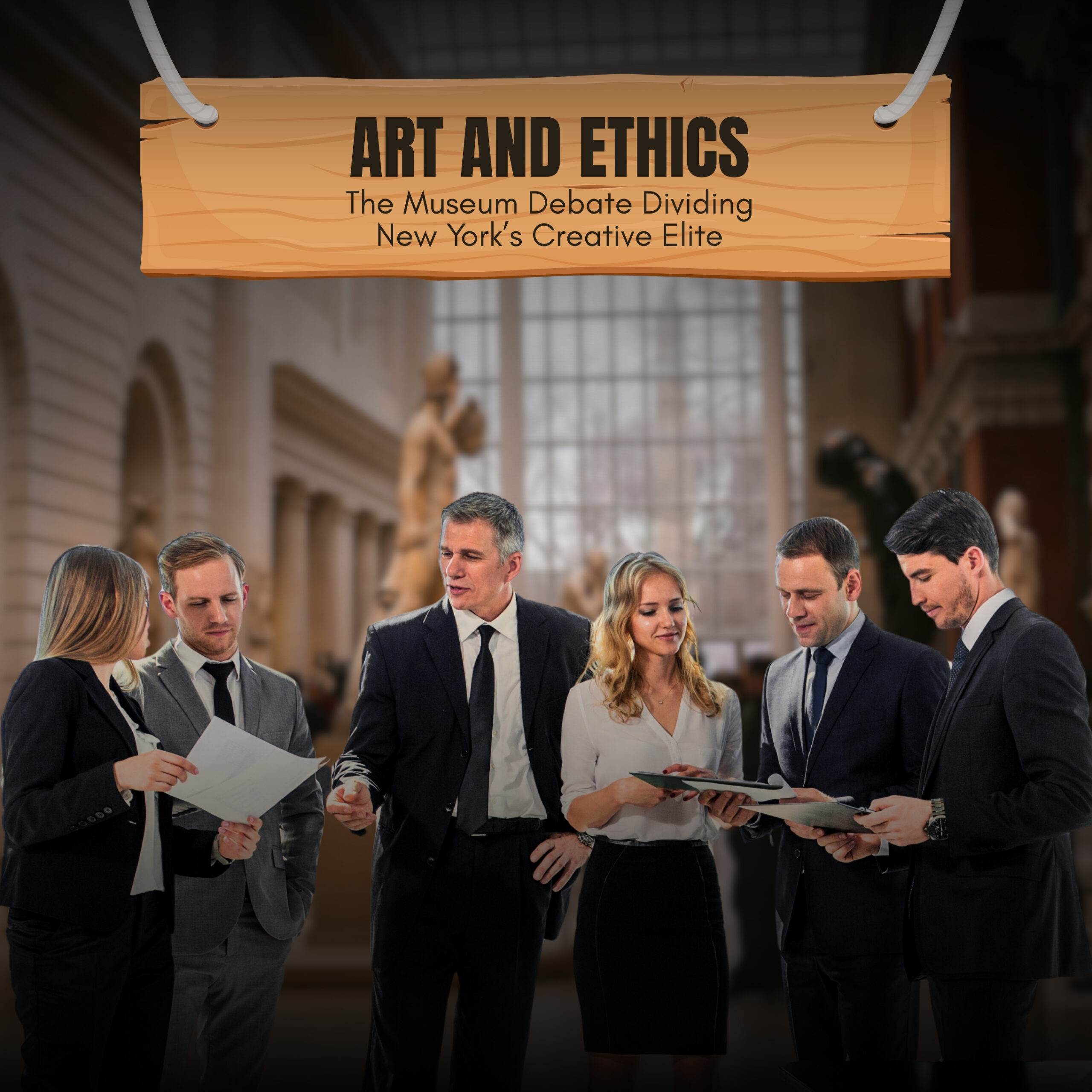
By Art and Ethics: The Museum Debate Dividing New York’s Creative Elite
As New York’s top museums face pressure over funding and ownership ethics, the city’s art world stands at a crossroads between culture and conscience.
The City’s Latest Cultural Storm
A quiet storm is sweeping through New York’s art world, one that has nothing to do with paint or sculpture, but with ethics.
This week, protests outside the Metropolitan Museum of Art drew hundreds of artists and activists. They demanded more transparency about how museum funds are raised and how certain artworks were acquired. Their question is simple:
Can art stay pure when money isn’t?
The Core of the Controversy
Many of New York’s biggest museums, including the Met, MoMA, and the Whitney are under scrutiny. Critics say some major donors have ties to industries linked to arms manufacturing, fossil fuels, and even political lobbying.
In 2023, a study by The New York Times revealed that nearly 20% of donations to large American museums came from companies or individuals accused of unethical practices. For artists who see museums as sacred spaces for creativity, this feels like a betrayal.
Others, however, argue that without such donors, museums would struggle to survive.
“It’s easy to point fingers,” said art historian Dana Wells. “But art needs funding, and those funds often come from where the wealth exists, not always from where ethics align.”
When Art and Money Collide
The debate isn’t new, but it’s louder now. In 2019, the Sackler family, owners of Purdue Pharma, faced widespread backlash for their ties to the opioid crisis. The Met later removed the Sackler name from several galleries after years of public pressure.
That move sparked a chain reaction. Other museums began reviewing their donor lists. Some canceled planned exhibitions tied to controversial figures.
But there’s a deeper issue, says Liam Porter, a curator at a Brooklyn art space.
“The question isn’t just who gives money. It’s whether the art we see on the walls reflects those power dynamics. Are we celebrating creativity or covering up corruption?”
The Numbers Tell a Story
According to Americans for the Arts, New York’s arts and culture sector adds over $120 billion to the state economy and supports more than 500,000 jobs. Yet public funding covers only a small portion of that — about 5%. The rest comes from private donors and corporate sponsors.
That financial gap forces museums to rely on big checks, even when they come with ethical baggage.
At the same time, younger audiences, especially Gen Z visitors, are demanding change. A 2024 Pew Research Center report found that 72% of Americans under 30 believe cultural institutions should cut ties with donors who have harmful business practices.
Artists Take a Stand
Many artists are now speaking out, refusing to show their work in spaces tied to questionable funding. Several local collectives in New York have launched campaigns under the banner “Art Without Strings.”
Their message: museums must be more transparent, even if it costs them financially.
Brooklyn-based painter Aisha Malik summed it up:
“Art is about truth. When money hides the truth, it’s not art anymore, it’s marketing.”
A City Torn Between Culture and Conscience
For New York, this debate hits close to home. Museums aren’t just tourist attractions, they’re part of the city’s identity. From school trips to weekend outings, millions of New Yorkers pass through these halls each year.
If funding dries up, jobs are at risk. Exhibits could shrink. Educational programs might disappear. But if museums ignore public concern, they risk losing trust, and that, some say, is far more damaging.
“It’s a balancing act,” said Thomas Reid, spokesperson for the Museum Association of New York. “We can’t run a museum without donors. But we also can’t run one without public confidence. The two must coexist.”
The Road Ahead
As the debate deepens, city officials are considering new guidelines for museum funding and public accountability. Some propose independent review boards to vet large donations before acceptance. Others call for greater government investment in the arts to reduce private influence.
Still, there’s no easy answer. Art, after all, has always lived in the space between beauty and controversy.
The Final Brushstroke
The museum debate isn’t just about money, it’s about values. New York’s creative elite now face a choice: preserve tradition or reshape it for a more ethical age.
For a city that thrives on expression and reinvention, the question remains:
Can New York paint a new picture of art, one that hangs on the wall without a shadow behind it?
Reporting by The Daily Newyorks Staff.