

 By
By Virtual Campuses Bloom: New York’s New Era of Digital Learning
As classrooms move online, New York steps into a new era, one where education has no walls, no bells, and no boundaries.
The New Halls of Learning
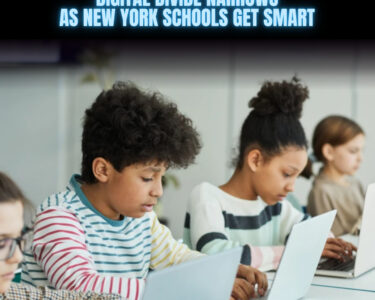
On a chilly Monday morning, students across New York logged in, not to brick buildings, but to virtual ones.
For some, the classroom was a bedroom desk. For others, a kitchen table. But wherever they sat, one thing was clear: school is changing fast.
After years of experimentation, virtual campuses are no longer a backup plan. They’re becoming the new normal for thousands of New Yorkers, from middle school students to adults earning online degrees.
City data shows that online course enrollment in New York State grew by 35% between 2019 and 2024, according to the New York State Education Department. The digital shift that began during the pandemic has now matured into a movement.
Why It’s Happening
The reasons are as layered as the city itself.
High costs, tight schedules, and crowded commutes have long made traditional schooling tough for many. But new technologies; from video learning to AI-driven tutors have changed the game.
“New Yorkers are busier than ever,” says Dr. Michael Trent, a digital education researcher at Columbia University. “Virtual campuses meet people where they are — at home, at work, or even on the subway.”
It’s a new kind of accessibility. A student in the Bronx can now take a coding class taught from a university in Brooklyn without spending hours traveling. Working parents can attend evening lectures online.
Education, once limited by geography, is now open to anyone with a stable internet connection.
The Rise of Digital Classrooms
New York’s top universities have led the charge.
- Columbia University expanded its online master’s programs by 50% since 2021, adding digital learning labs for international students.
- NYU’s Tandon School of Engineering now offers fully remote degrees in data science and cybersecurity.
- The City University of New York (CUNY) reported that over 60% of its students took at least one online course in 2024.
Private platforms are following suit. From Coursera to edX, online programs tied to New York institutions have doubled their enrollments in just two years.
The result? A digital education boom that mirrors the city’s creative energy: fast, diverse, and always adapting.
A City of Learners Without Borders
For many, this shift feels like freedom.
“I couldn’t afford the rent near campus,” says Sofia Martinez, a Brooklyn resident studying marketing online at NYU. “But now I can study from home, work part-time, and still get the same degree.”
She’s one of many who found opportunity through technology, not location.
In a city where the average rent for a one-bedroom apartment hit $3,500 in 2025 (Zillow), online education isn’t just convenient, it’s essential.
Virtual learning helps ease a different kind of crowding. While housing remains tight, digital campuses expand endlessly. There’s always room for one more student.
The Technology Behind the Change
Behind the screen, a quiet revolution is happening.
AI tutors help students learn faster. Virtual reality brings science labs to laptops. Platforms like Google Classroom and Zoom have become the backbone of New York’s education system.
The city’s Department of Education launched “NYC Digital Scholars,” a program that equips public school students with laptops and internet access. The goal: to make sure every student can join the virtual wave.
But challenges remain. Not every home has reliable Wi-Fi. Not every student learns best through a screen.
“We must build digital access the way we build roads, as public infrastructure,” says Dr. Lila Ahmed, an education policy expert at CUNY. “Otherwise, virtual learning could deepen the gap between those who have and those who don’t.”
What It Means for New York
Digital learning could reshape how the city grows and works.
Fewer students commuting daily could ease subway congestion. More adults gaining new skills online could strengthen the job market. Companies could hire trained workers faster, right from the neighborhoods they live in.
According to the New York State Labor Department, job openings in tech, healthcare, and digital design are expected to rise by 22% by 2030 — many requiring skills now taught through online programs.
In other words, virtual classrooms aren’t just changing education; they’re powering the city’s next economy.
Not Without Concerns
Still, there’s unease. Teachers say online learning can’t replace the human connection of in-person classrooms. Some worry about burnout and isolation.
“Learning is more than clicking through screens,” says Jason Lee, a high school teacher in Queens. “It’s conversation, it’s collaboration, it’s community. We can’t lose that.”
And not every subject fits the digital model. Fields like nursing, art, or architecture still require hands-on training. For now, hybrid programs, part online, part in-person, seem to offer the best of both worlds.
A Hybrid Future
Many experts believe New York’s future lies in hybrid education, blending physical and virtual campuses.
The city is already exploring “shared learning hubs” community spaces where online students can meet, study, and collaborate in person. Libraries and coworking spaces are joining in, offering Wi-Fi, quiet zones, and digital tools for learners.
This approach could make education both personal and scalable, a model that reflects the city’s mix of tradition and innovation.
My Opinion
Virtual campuses are here to stay. They’ve turned laptops into lecture halls and homes into classrooms.
For New York, this digital bloom is more than a trend; it’s a turning point. The city that once built its greatness from stone and steel is now shaping its future from pixels and code.
But the question remains: can digital learning stay inclusive and equitable as it grows?
If it can, then New York’s next skyline won’t just rise in glass towers; it will rise online, in every home where a student logs in to learn.
Reporting by The Daily NewYorks Staff Writer.