
 By
By New York 2050: A Glimpse Into the Vertical City of Tomorrow
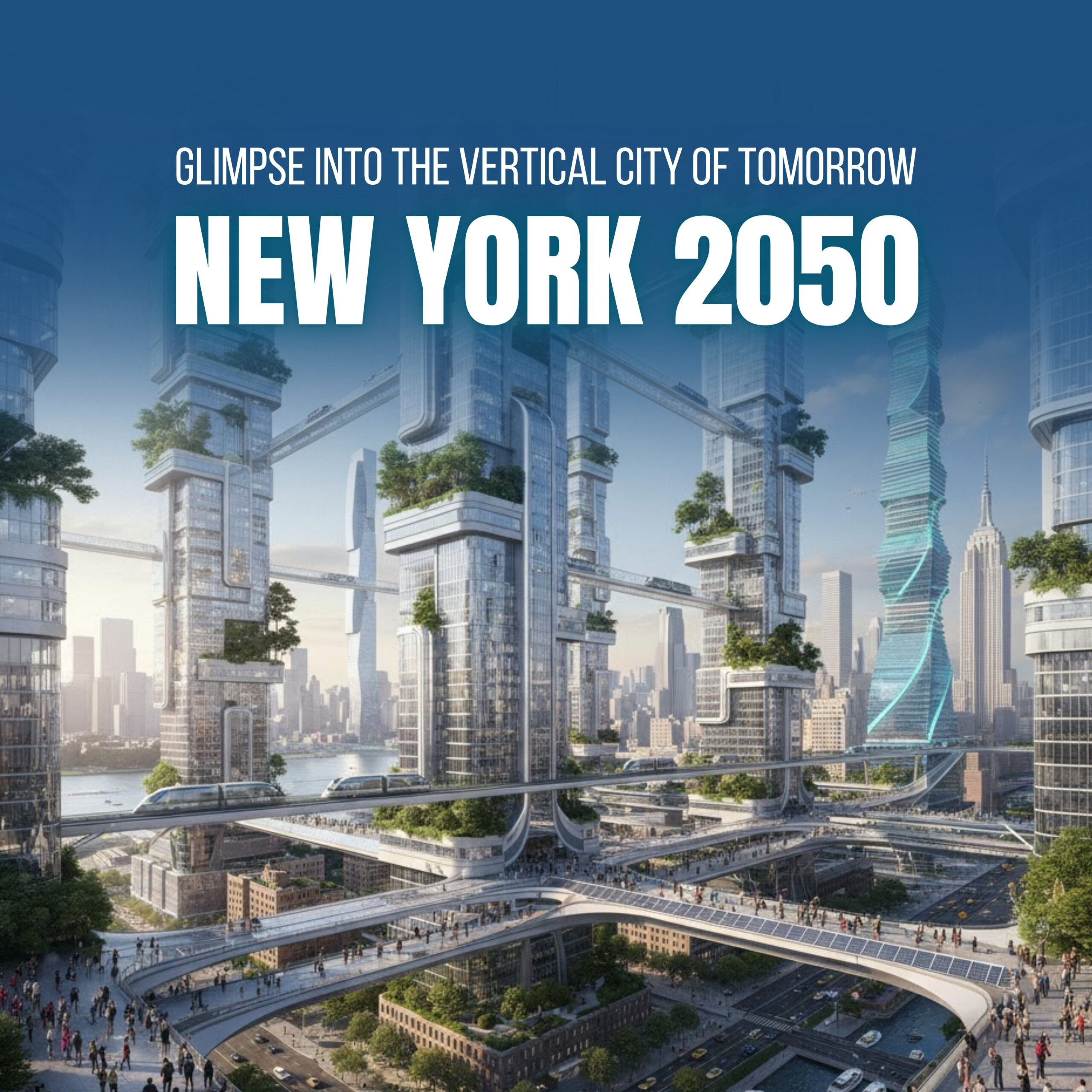
How New York might look in 2050, with skyscrapers reaching the clouds, streets above streets, and a city reshaped by technology and design.
A Sky-High Future
New York in 2050 could be unrecognizable. Imagine buildings taller than the Empire State, sky parks above the streets, and drones buzzing between towers. Urban planners say the city must grow up, not out, as population and demand increase.
By 2050, New York is expected to host over 10 million residents, up from 8.5 million today (source). That’s a lot of people to fit on Manhattan’s island, making vertical living the new solution.
The Rise of the Vertical City
Skyscrapers won’t just house offices and apartments. Experts predict mixed-use towers combining homes, shops, schools, and parks in one building. Think of a building where you can live, work, shop, and play without leaving the tower. It’s a vision that could reduce traffic, save energy, and make commuting almost obsolete.
Architects also plan sky gardens and green terraces to improve air quality and provide outdoor space in a dense city (source).
Vertical farms may feed residents locally, cutting the need to transport food from far away. This is not just futuristic dreaming, it’s practical planning for climate change and sustainability.
Smart Buildings and Tech Everywhere
By 2050, buildings will be smarter. Sensors will monitor air, energy, and traffic inside towers. Elevators will be high-speed, moving diagonally and stopping at sky lobbies. Smart glass could adjust light and temperature, saving energy while keeping residents comfortable.
Public transportation will also rise into the sky.
Experts predict flying taxis and drone delivery systems as a normal part of city life (source). Streets may shift for pedestrians and bikes, with most cars moving underground. Technology will guide people, not just traffic, making the city safer and more efficient.
Impact on New Yorkers
Living in a vertical city changes everything. Commutes shrink, and neighborhoods are redefined by height instead of streets. Jobs grow in construction, tech, urban planning, and green energy. Vertical farming could employ thousands in agriculture without leaving the city.
However, challenges remain. High-rise living may raise housing costs. Safety rules must adapt for emergencies in mega-towers. Mental health experts warn that access to open spaces and social areas is essential in a vertical lifestyle.
Voices from the City
“New York has always been about dreaming big,” says urban planner Leah Martinez. “In 2050, the city will show how humans can live efficiently and creatively in one of the densest areas on Earth.”
Resident David Kim adds,
“I like the idea of parks above the city. Kids will grow up with a view of green space no matter where they live.”
Looking Ahead
The vertical city is a vision, but planning is already underway. New zoning rules and building designs are adapting to this future. By 2050, New York could be a model for other cities struggling with population growth and climate change.
The skyline may look different, but the heart of New York; its culture, diversity, and energy will remain.
The question is, are we ready to live up, not out? The vertical city challenges tradition, but it may just be the key to a sustainable, bustling New York of tomorrow.
Reporting by The Daily NewYorks Staff Writer.