

 By
By Trump Warns Iran of ‘Very Hard’ US Response
As Tehran’s Leaders Rally Thousands, America Debates the Cost of War
The drumbeat of conflict in the Middle East is growing louder. In Washington, the message is blunt: the United States is prepared to strike harder if Iran continues to challenge American and allied interests.
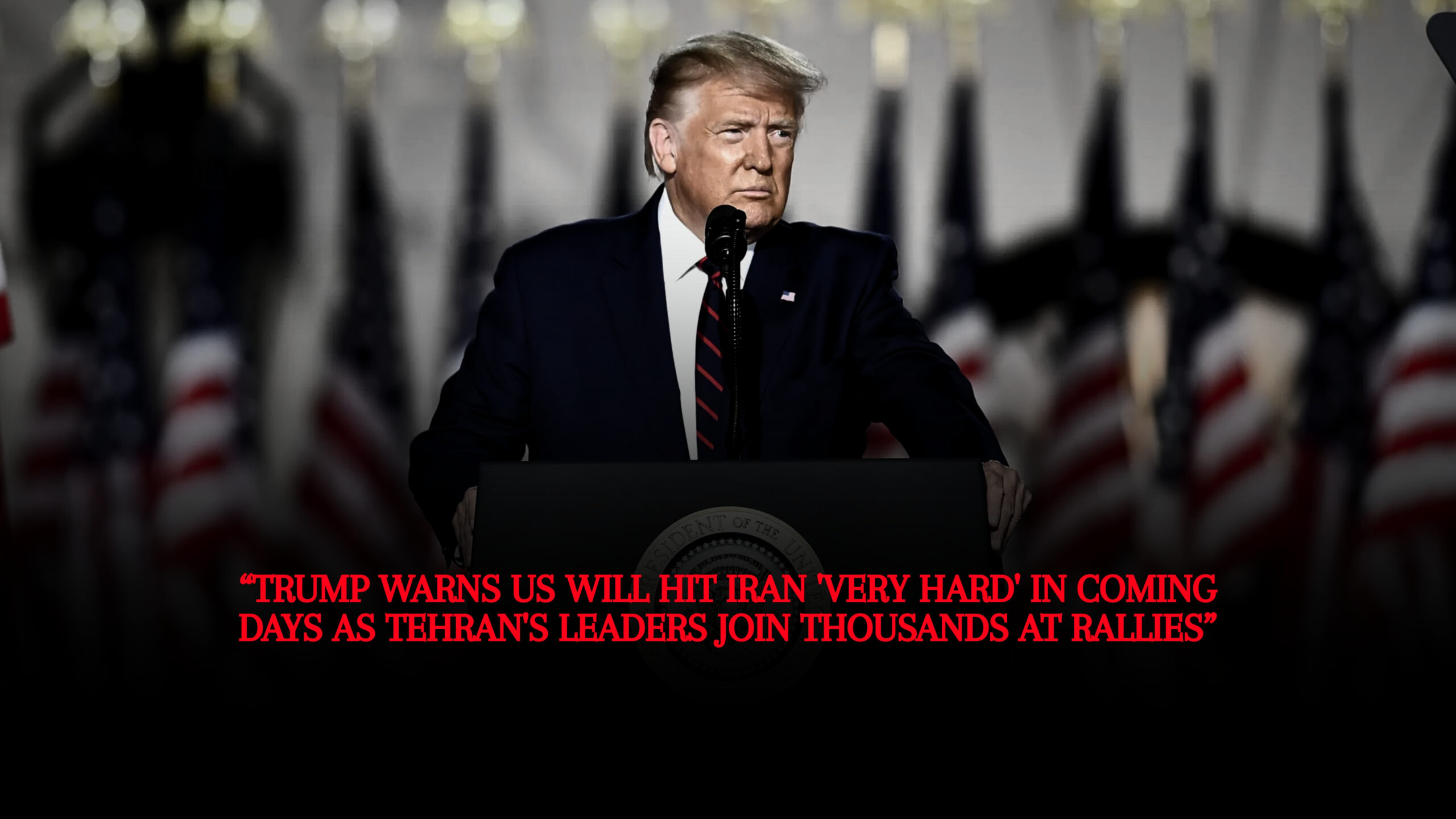
In recent remarks, former U.S. President Donald Trump warned that the United States would hit Iran “very hard” in the coming days, escalating tensions that have already drawn the region closer to a broader confrontation. Meanwhile, in Tehran, Iranian leaders appeared at mass rallies attended by thousands, projecting strength and defiance in the face of mounting pressure.
For Americans watching from thousands of miles away, the conflict raises an uncomfortable question: Is this a necessary stand against a rival power, or the start of another long war?
A Conflict Moving Toward a Breaking Point
Tensions between the United States and Iran have been building for months, fueled by political unrest, military strikes, and increasingly sharp rhetoric from leaders on both sides.
Recent U.S. and allied operations targeting Iranian military positions have intensified the standoff. Washington argues that these actions are meant to deter aggression and protect strategic interests in the region, particularly the safety of American troops and the security of global energy routes.
One of the biggest flashpoints remains the Strait of Hormuz, a narrow but crucial waterway through which a large share of the world’s oil supply travels. U.S. officials have warned that American naval forces could escort commercial vessels through the strait if tensions escalate further.
For global markets, and American households, the stakes are enormous. Any disruption could send energy prices soaring and shake international trade.
Tehran’s Response: Defiance in the Streets
While Washington threatens harsher military action, Iran’s leadership is attempting to show resilience.
Thousands of people gathered in Tehran for rallies alongside senior officials and religious figures. The demonstrations were intended to signal national unity and resistance against Western pressure.
Iranian leaders have warned that further U.S. strikes could provoke retaliation across the region, potentially drawing in allied militias and expanding the conflict.
For analysts, the message from Tehran is clear: Iran is determined to show that it will not be intimidated.
Voices From Capitol Hill: Senators Weigh In
As tensions rise, several prominent American senators have spoken publicly about the situation, reflecting a range of views inside the U.S. political system.
Lindsey Graham: “America Must Show Strength”
Republican Senator Lindsey Graham has been among the strongest voices calling for a firm response.
“If Iran continues to threaten our allies and our troops, the United States must respond with overwhelming force. Weakness invites aggression.”
Graham argues that a decisive military posture could prevent a larger war by deterring Iran from further escalation.
Marco Rubio: “The Stakes Are Global”
Florida Senator Marco Rubio has emphasized the global impact of the crisis.
“What happens in the Middle East doesn’t stay in the Middle East. Energy markets, global trade, and international stability are all tied to what unfolds between the United States and Iran.”
Rubio supports maintaining pressure on Tehran while keeping diplomatic options open.
Bernie Sanders: “America Cannot Repeat Past Mistakes”
Not all lawmakers support a confrontational path.
Independent Senator Bernie Sanders has warned that the United States should avoid another prolonged war.
“The American people have seen the cost of endless wars. Military action must always be the absolute last resort.”
Sanders has urged the administration to prioritize diplomacy and international cooperation.
Elizabeth Warren: “Congress Must Have a Say”
Massachusetts Senator Elizabeth Warren has focused on the constitutional role of Congress in decisions about war.
“The decision to send American troops into conflict cannot be made unilaterally. Congress must debate and authorize any major military action.”
Her comments reflect a growing debate in Washington about the limits of presidential power during international crises.
The American Perspective: Security First
From Washington’s strategic viewpoint, the confrontation with Iran is framed primarily as a matter of national security.
For decades, U.S. policymakers have viewed Iran’s regional influence and nuclear ambitions as significant threats. The strategy adopted by many administrations, Republican and Democratic alike, has combined economic sanctions, diplomatic pressure, and military deterrence.
Supporters of the current approach argue that a strong stance is necessary to prevent Iran from expanding its military reach and destabilizing the Middle East further.
In this view, the United States is not seeking war, but it is prepared to act if its interests or allies are threatened.
Voices From American Citizens: Between Fear and Resolve
For ordinary Americans, however, the issue is far more complex.
Across the country, public opinion reflects a mixture of concern, patriotism, and skepticism. Many Americans support protecting U.S. interests abroad. Yet they are also wary of another prolonged military conflict.
Memories of wars in Iraq and Afghanistan still shape public opinion.
What Americans Are Saying
Support for Strong Defense
Some citizens believe confronting Iran is necessary to maintain global stability and protect allies.
2. Fear of Another Endless War
Others worry that escalating strikes could spiral into a wider regional conflict involving multiple countries.
3. Economic Concerns
Americans also worry about rising oil prices and economic uncertainty if the crisis disrupts global supply chains.
4. Hope for Diplomacy
Despite the tension, many still hope that diplomatic negotiations could prevent a full-scale war.
In living rooms, workplaces, and online forums across the United States, the same question keeps returning: Is this conflict unavoidable?
The Global Stakes
Beyond Washington and Tehran, the crisis could reshape the geopolitical landscape.
The Middle East remains central to global energy supply, and instability there has ripple effects across the world economy. Oil markets have already reacted to the rising tensions, reflecting fears of disruptions to shipping routes.
Major powers, including Russia and China, are closely watching the situation while advocating for diplomatic solutions.
If the confrontation escalates further, it could transform from a regional dispute into a broader international crisis.
A Nation Watching the Countdown
For now, Americans are watching carefully as events unfold.
News broadcasts and social media are filled with images of rallies in Tehran, military movements in the Gulf, and political debates in Washington.
The United States has made its warning clear. Iran has responded with defiance.
And somewhere between those two positions lies the uncertain future of the Middle East, and the possibility of a conflict that could shape global politics for years to come.
For many Americans, the feeling is familiar:
They support strength. They value national security.
But after decades of overseas wars, they are also asking whether the next conflict is truly necessary, or whether diplomacy still has one last chance to prevail.
Reporting by The Daily Newyorks Staff Writer.