

 By
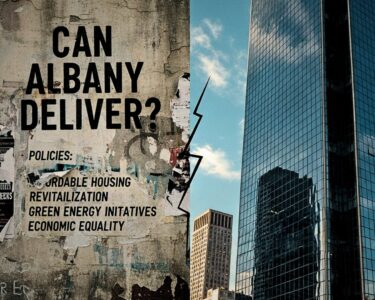
By As political tides shift in Albany, New York faces a leadership shake-up that could change how the state is run, from City Hall to the State Senate.
A City at a Crossroads
New York is in the middle of a political storm. From rising tensions between the governor’s office and city leaders to fierce debates over housing, crime, and migrant policies, the state’s leadership map is being redrawn in real time.
Just last week, the state’s budget hearings turned into a fiery debate over funding priorities. Lawmakers clashed on how to balance economic recovery with growing public safety concerns. For many New Yorkers, it’s not just politics, it’s about their daily lives.
Leadership in Motion
Governor Kathy Hochul’s administration has been under growing pressure to respond to rising housing costs and street-level crime. According to a 2024 report by the New York State Comptroller’s Office, rent prices in New York City rose nearly 32% between 2019 and 2024 (source). That’s one of the fastest increases in the country.
At the same time, the state is trying to tackle budget gaps caused by post-pandemic spending. Public services, transit systems, and education programs all face funding uncertainty. Political analysts say these competing priorities have turned Albany into a battlefield.
“There’s a power struggle happening, not out of greed, but out of urgency,”
said Dr. Maria Torres, a political science professor at NYU. “Everyone wants to shape the future of New York, but no one agrees on what that future should look like.”
The Battle Lines
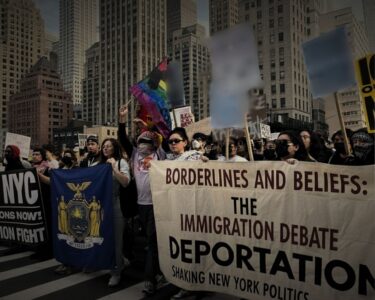
At the heart of this storm lies a clash between state and city leadership. Mayor Eric Adams has been vocal about the rising costs of managing the migrant crisis, while Albany pushes for more accountability in city spending.
According to The New York Times, more than 180,000 migrants have arrived in New York City since 2022 (source), putting enormous strain on shelters and social services. The city’s budget office says migrant-related costs could hit $12 billion by 2026.
For many residents, that number is staggering. “We want to help,” said Bronx resident Anthony Reed, a local shop owner. “But the city feels stretched thin. It’s like a blanket that can’t cover everyone.”
The Reform Agenda
Amid this tension, reform voices are growing louder. Lawmakers are calling for more transparency in campaign funding, term limits for city officials, and stronger ethics rules.
A new survey from Siena College found that 68% of New Yorkers believe the state needs “major political reform” (source). Citizens say they’re tired of gridlock and want leaders who work together instead of fighting for credit.
Some reformers are also pushing for new voting systems that give communities a stronger say in local elections. Ranked-choice voting, first tested in the city’s 2021 elections, may expand statewide if current proposals pass.
Economic Stakes Are High
While politics dominate the headlines, the state’s economy sits on the edge of recovery. Job growth is steady, but uneven.
According to the U.S. Bureau of Labor Statistics, New York added about 90,000 new jobs between January and August 2025 (source), but many of them are in low-wage sectors. Tech, finance, and tourism are bouncing back — yet small businesses still struggle with rent and taxes.
Economists warn that political uncertainty could slow investor confidence. “Businesses want stability,” said Harold Benson, a Manhattan-based economist. “When state leaders fight publicly, it sends a bad signal to markets — and that affects jobs.”
How It Hits Home
For everyday New Yorkers, this power play isn’t just about party lines. It’s about the price of groceries, the safety of subways, and whether their kids can afford college.
The MTA’s financial struggles, for example, could lead to fare hikes or service cuts if state funds fall short. The housing crisis continues to push families out of their neighborhoods. And with budget debates dragging on, school districts remain uncertain about future funding.
“We need our leaders to stop pointing fingers,”
said Linda Cho, a Queens teacher.
“I just want to know if my classroom will still have enough books next year.”
The Push for Unity
Behind closed doors, there are signs of compromise. Reports suggest that Governor Hochul and Mayor Adams have begun private talks on a joint economic plan focused on affordable housing and public safety.
If successful, it could mark the start of a new political chapter, one defined by cooperation instead of confrontation.
Political observers say that unity may be the only way forward.
“New York thrives when its leaders pull in the same direction,”
said Dr. Torres.
“That’s how we built this state. That’s how we’ll rebuild it again.”
Looking Ahead
The months ahead will test how strong New York’s leadership really is. As lawmakers prepare for next year’s budget session, eyes are on Albany to deliver action instead of arguments.
The question now is simple: will New York’s leaders find common ground, or will political divides deepen the cracks already showing in the city’s foundation?
For millions of New Yorkers, the answer will shape not just policy, but the pulse of the state itself.
My Opinion
New York has always been a place of power, passion, and persistence. But today, it stands at a crossroads where politics meets the people’s patience.
Whether this storm leads to renewal or more unrest will depend on how leaders choose to act, together or apart.
One thing’s for sure: in the city that never sleeps, politics never do either.
To get more about NYC politics follow Daily NewYork