
 By
By Digital Divide Narrows as New York Schools Get Smart
New York’s classrooms are going digital, but is technology enough to close the education gap for every student?
A City Learning to Connect
Last fall, fourth-grader Jamal Ortiz logged into his first digital science class from a brand-new tablet at a public school in the Bronx. Just two years ago, his school had only a handful of working computers. Today, every student has access to high-speed internet and a personal device.
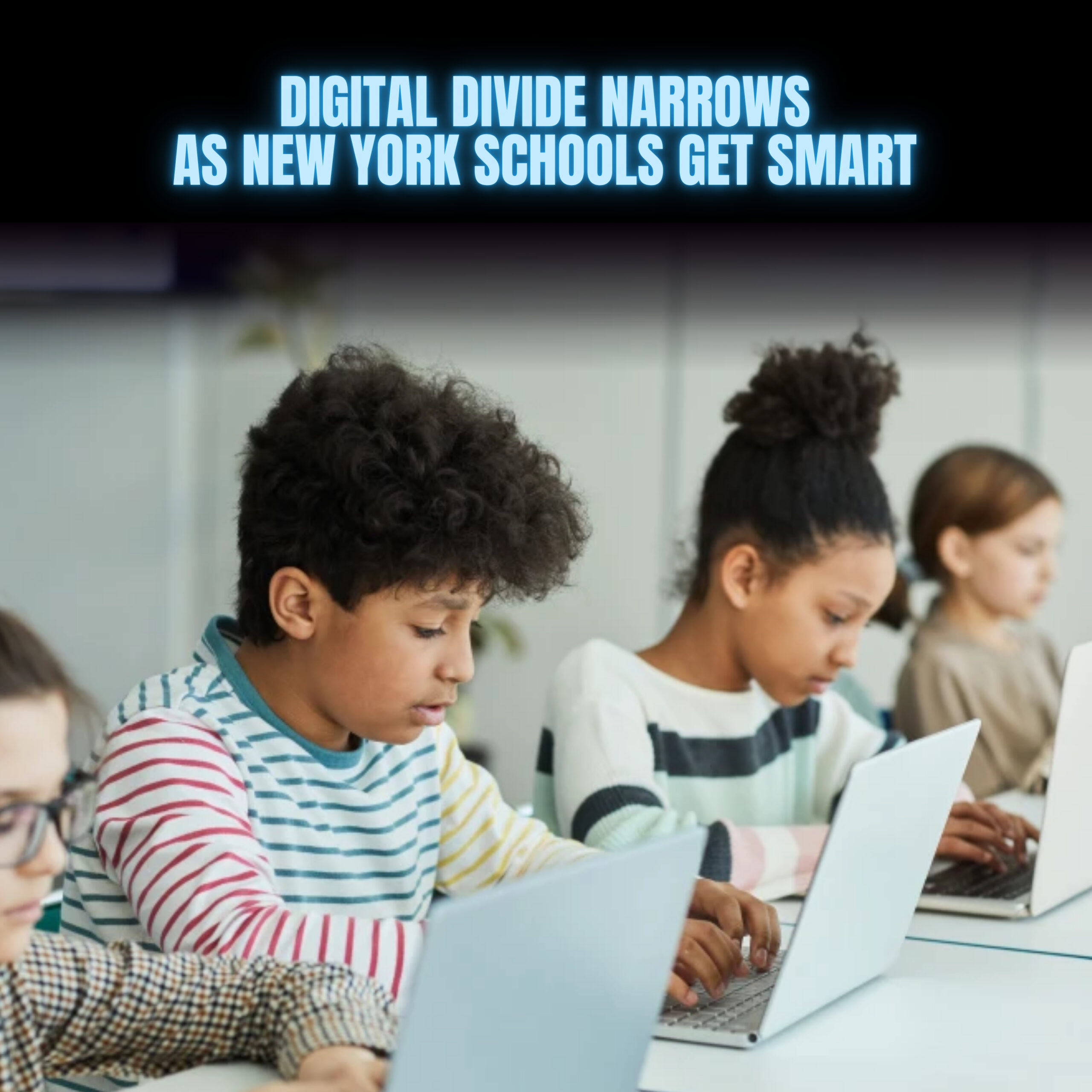
Across New York City, this scene is becoming more common. Classrooms are transforming. Teachers are swapping chalkboards for smartboards. Students are coding, researching, and submitting assignments online.
According to the New York City Department of Education, over 500,000 digital devices have been distributed to students since 2020. Broadband coverage has expanded to nearly 98% of public schools, helping bridge what used to be a massive digital divide.
But as technology spreads, a new question rises: can access alone fix the learning gap between neighborhoods?
The Divide That Was
Before the pandemic, access to technology in schools was uneven. In low-income areas like parts of the Bronx, Brooklyn, and Queens, students often shared outdated computers or used phones to complete assignments.
In 2019, a Pew Research Center study found that 35% of lower-income households with school-age children lacked reliable internet. That meant many students couldn’t join online classes or submit digital homework.
When schools shut down during COVID-19, the digital gap became impossible to ignore. Thousands of students disappeared from online attendance records because they simply couldn’t log in.
The crisis forced the city to act. Programs like “Connected NYC Students” and “Smart Schools Bond Act” poured millions into devices, Wi-Fi hotspots, and digital tools.
Now, the progress is visible, but the challenges aren’t over.
Smart Schools, Smarter Access
Today, New York’s classrooms look very different.
- Every student in grades K–12 now has access to a city-provided device.
- High-speed internet has reached nearly every school.
- Teacher training programs have expanded, helping educators use tech effectively in class.
City officials say this is part of a larger vision to make every public school a “smart school.”
“The goal isn’t just giving students screens; it’s giving them skills,” says Dr. Michael Rivera, an education policy advisor for the city. “We want every child, no matter the ZIP code, to be tech-literate by the time they graduate.”
According to NYC DOE data, digital learning tools have already improved engagement rates in math and reading programs by 14% citywide since 2021.
Hidden Gaps That Still Exist
Yet, even as access improves, inequality remains.
Some families still struggle with internet costs at home. Others lack quiet study spaces or adult tech support. For them, the divide is less about devices, and more about environment.
A 2024 report by the Education Trust–New York found that one in five public school students still experience “digital learning barriers” like unreliable Wi-Fi or limited data plans.
And technology alone can’t fix deeper education challenges, overcrowded classrooms, outdated curricula, and uneven teacher resources.
“Digital tools are powerful,” says Karen Lewis, a teacher in Harlem. “But if students come to class hungry or stressed, no tablet can solve that.”
Why It Matters
Closing the digital divide is about more than convenience, it’s about opportunity.
In a city where the economy increasingly depends on tech and data-driven industries, digital skills are the new literacy. Students who learn coding, online research, and virtual collaboration today are more likely to land high-paying jobs tomorrow.
The New York State Department of Labor projects that tech-related employment in New York will grow by 25% by 2030. That means the next generation must be ready.
For parents, too, digital access means more involvement. Online grading systems and parent portals make it easier to track student progress, something nearly 67% of NYC parents now use regularly, up from just 29% in 2018.
The City’s Next Move
To keep progress going, city leaders are focusing on three key steps:
- Expand home connectivity through low-cost internet programs for families.
- Train teachers continuously to integrate digital learning effectively.
- Invest in long-term maintenance, ensuring devices and software stay updated.
The Mayor’s Office of Technology and Innovation recently launched “NYC Connected Classrooms,” a five-year plan to upgrade school networks and provide every student with hybrid learning options.
City officials call it “the most ambitious digital education effort in U.S. public school history.”
Still, funding and follow-through remain challenges. Budget cuts could slow expansion, especially in schools already struggling with resources.
What New Yorkers Are Saying
Parents, teachers, and students see both the progress and the pitfalls.
Angela Soto, a parent from Queens, says the change is huge:
“My daughter does all her homework online now. Before, she used to borrow her cousin’s phone to type essays. Now she can learn coding and design her own projects.”
But others remain cautious. James Wu, a high school principal in Brooklyn, worries that “we risk over-relying on tech.”
“Smart schools are great,” he says, “but they still need smart teachers, strong community support, and equal opportunities for all.”
The Bigger Picture
New York’s journey from disconnected to digital is more than a story of Wi-Fi and tablets; it’s a test of equity.
The city’s success will depend not just on closing the gap in access, but closing the gap in outcomes. It’s about ensuring every student, from the Bronx to Staten Island, has the same chance to thrive in a digital world.
Experts agree: the divide may be narrowing, but it isn’t gone.
As Dr. Rivera puts it, “The real measure of progress isn’t how many screens we hand out. It’s how many futures we open up.”
My Opinion:
New York’s schools are getting smarter; faster internet, better devices, stronger digital literacy. But access is only the first step. To truly bridge the divide, the city must focus on inclusion, training, and consistent investment.
If every student can learn, connect, and dream online, New York won’t just close the digital divide, it’ll lead the nation in education innovation.
The question now is simple: will the progress keep pace with the promise?
Reporting by The Daily Newyorks Staff Writer.