

 By
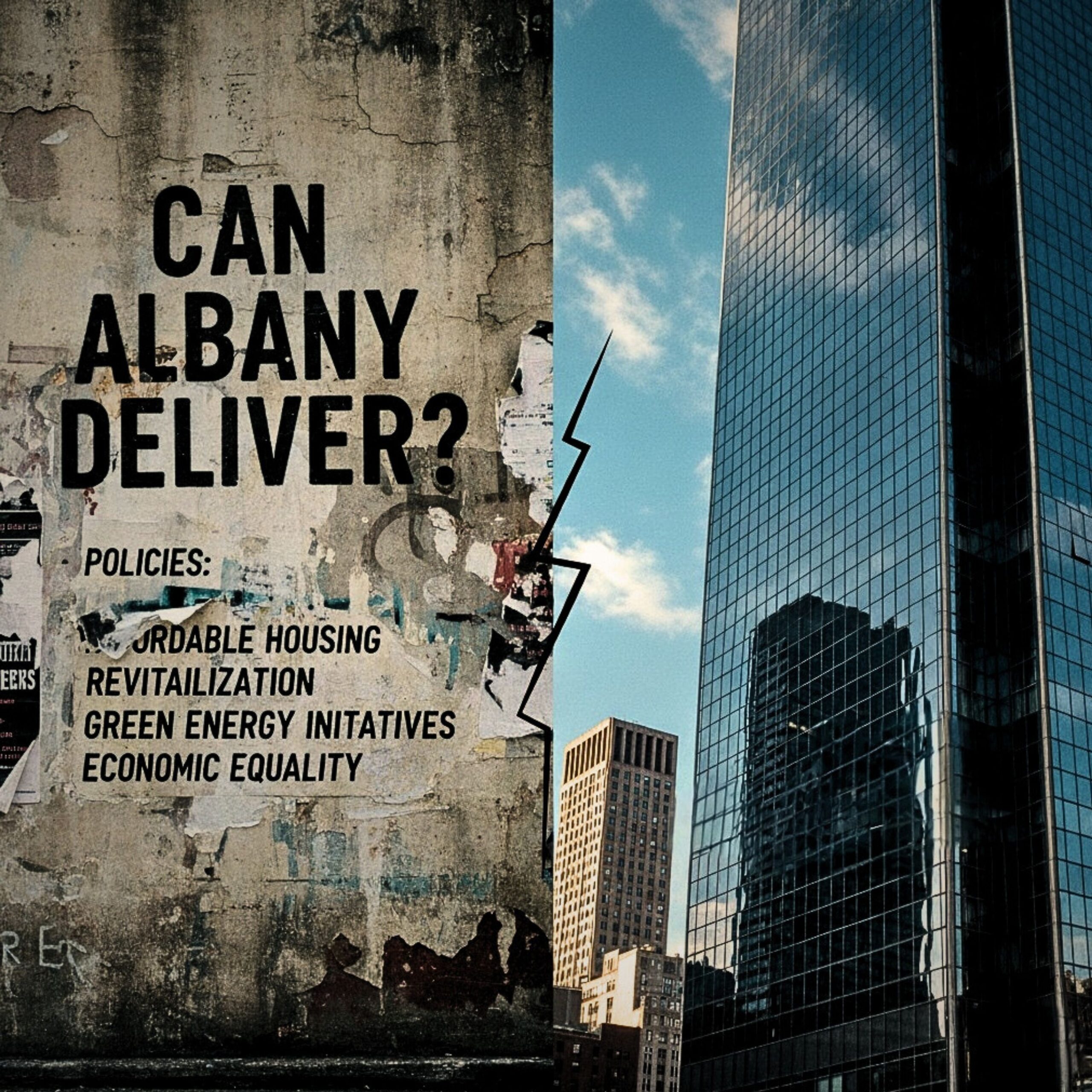
By Can Albany Deliver? The Policies That Could Make or Break New York
As lawmakers meet in Albany, the state’s biggest promises hang in the balance. From housing and taxes to jobs and safety. What happens next could shape New York’s future for decades.
The Stakes Are High in Albany
New York’s capital is buzzing again. Lawmakers are back at the table, debating policies that could change how millions of New Yorkers live and work. From affordable housing to clean energy, and from tax reform to crime prevention, Albany’s choices this year could make or break the state’s recovery.
But as usual, New Yorkers are asking the same question: Can Albany actually deliver?
A State at a Crossroads
New York is facing both promise and pressure. After years of population decline, the state finally saw a small rebound, adding nearly 25,000 residents in 2023 (U.S. Census Bureau). But challenges remain. Housing costs are rising, job growth is slowing, and small businesses are still struggling to recover from the pandemic’s shadow.
A recent NYC Comptroller report found that more than 1 in 3 renters spend over half their income on rent. Meanwhile, energy costs have jumped nearly 12% over the past year, according to the U.S. Energy Information Administration.
It’s clear, the cost of living is pushing families to the edge.
The Housing Promise
Governor Kathy Hochul has made housing her biggest goal. Her “New York Housing Compact” aims to build 800,000 new homes over the next decade, especially in areas with growing job markets.
But the plan has met resistance. Some local leaders worry about overdevelopment, while others say the state isn’t moving fast enough.
“People are being priced out of their hometowns,” says Rachel Levinson, a housing advocate in Albany.
“If the state can’t fix housing, everything else falls apart.”
Affordable housing could be the key to keeping young professionals, teachers, and nurses in the state. But without clear funding and local support, experts warn it may stay a promise on paper.
Jobs, Taxes, and the Economic Tightrope
The state’s economy is recovering, but unevenly. New York’s unemployment rate stands at 4.3%, slightly above the national average of 3.8% (U.S. Bureau of Labor Statistics).
Upstate towns are still waiting for job growth that hasn’t reached them, while downstate areas like New York City face high living costs and declining office space demand.
Albany’s proposed business tax cuts and renewable energy incentives could help attract companies. Yet some economists warn that without controlling spending, the state’s $237 billion budget could grow unsustainable.
“We can’t tax our way out of a slow economy,” says Mark Douglas, an analyst at the Empire Policy Institute.
“Albany needs a balanced approach, one that supports both workers and small businesses.”
The Safety and Quality of Life Debate
Public safety remains a top concern. After a spike in crime during 2020–2021, numbers have improved, but fears remain. According to the NYPD’s 2024 data, major crimes dropped 5.6% across New York City. Yet many New Yorkers still say they don’t feel safe, especially in subways and public spaces.
Albany lawmakers are split on bail reform laws, whether they protect fairness or weaken accountability. Police unions are asking for more support, while community leaders call for more focus on youth programs and mental health.
Meanwhile, environmental and energy policies add another layer. The state’s ambitious Climate Leadership and Community Protection Act targets zero-emission electricity by 2040, but it demands billions in new infrastructure. Some say it’s too slow, others say too expensive.
The Human Impact
For ordinary New Yorkers, these debates aren’t just politics, they’re personal. Every new policy touches someone’s rent, paycheck, or safety.
Small business owners want lower taxes. Parents want safer schools. Young workers want jobs they can grow in without leaving the state.
Angela Soto, who runs a bakery in Queens, says her monthly costs have tripled. “Electricity, supplies, rent; everything’s up,” she says.
“If Albany wants small businesses to survive, they have to listen to us, not just talk.”
That’s the sentiment echoing across the state, from Buffalo to Brooklyn.
What’s Next for Albany?
The months ahead will test whether political will can turn into real progress. Housing reform, tax relief, and safety policies will shape the next budget and the lives of nearly 20 million New Yorkers.
Experts say cooperation is key. In past sessions, partisan battles slowed down major bills, leaving both sides frustrated. This time, voters are watching closely.
“There’s a window to make bold moves,” says Dr. Lila Chan, a policy professor at Columbia University.
“If Albany misses it, the trust gap between people and government will grow wider.”
Can Albany Deliver?
The story of New York has always been one of resilience. The state has weathered crises before, from 9/11 to the pandemic, and found ways to rebuild. But this moment feels different. The challenges are layered: housing, economy, climate, safety. Each depends on the other.
Albany’s choices in the coming months will decide if New York becomes a place where families can thrive, or one where opportunity keeps slipping away.
The answer, as always, lies not just in policy, but in action.
Takeaway:
New York stands on a knife’s edge, between revival and retreat. Albany holds the pen that will write the next chapter. The question is, will it be one of progress or promises unkept?
Reporting by The Daily Newyorks Staff Writer.