

 By
By AI Classrooms Arrive: How New York Schools Are Teaching the Future
From Brooklyn to the Bronx, New York classrooms are quietly changing, and the next generation is learning from machines that can think.
A New Kind of Teacher in Town
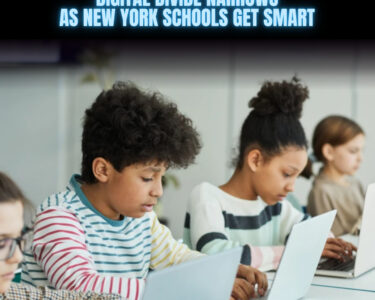
Last week at P.S. 234 in Tribeca, a fifth-grader named Aria asked her digital tutor a math question. Within seconds, the screen not only solved the problem. It explained why her answer was almost right. Her teacher, Ms. Rivera, smiled. “It’s like having a co-teacher who never gets tired,” she said.
That’s the new face of education in New York City. Artificial Intelligence, once confined to labs and Silicon Alley startups has entered the classroom.
From AI-powered tutoring tools to smart grading assistants, schools across the city are experimenting with technology that promises personalized learning for every student. And while excitement is high, so are the questions: Can AI make learning fairer, smarter, and more human?
The Core Shift: Personalized Learning for Every Student
New York’s public schools serve more than 900,000 students, one of the largest education systems in the country (NYC DOE). Each classroom is filled with learners of different speeds, languages, and strengths.
AI offers a way to handle that diversity.
Programs like Khanmigo (developed by Khan Academy) and Class Companion AI use data to track progress and adjust lessons in real time. Students who struggle get extra help instantly. Those ahead move faster. Teachers say it feels like teaching in “high definition.”
“AI lets me see who’s stuck before they even raise their hand,” said Mr. Patel, a middle school math teacher in Queens. “It doesn’t replace me, it sharpens what I can do.”
The U.S. Department of Education calls this the “next great leap” in public learning. Early studies show students using AI-supported tutoring improve test scores 15% to 25% faster than those in traditional setups.
The Tech Behind the Desk
At the heart of these changes are tools powered by natural language models, the same kind that make chatbots like ChatGPT work. But in classrooms, they’re adapted for safety, control, and accuracy.
AI assistants can:
- Grade essays and provide feedback within minutes.
- Translate lessons for multilingual students.
- Simulate science labs virtually when equipment isn’t available.
- Help teachers plan lessons based on each student’s learning curve.
In Brooklyn Tech High School, students are using AI to generate 3D designs in engineering labs. In the Bronx, English learners use real-time translators to understand Shakespeare in their own language.
The city’s Department of Education (DOE) says the goal isn’t to replace teachers, it’s to equip them. “AI is the new chalkboard,” said David Banks, NYC Schools Chancellor, in a recent press statement.
Why It Matters: The Skills of Tomorrow
AI isn’t just changing how students learn, it’s shaping what they learn.
In 2024, the DOE launched a Digital Future Curriculum introducing AI literacy in 400 middle and high schools. Students now learn how algorithms work, how bias can appear in data, and how to use AI responsibly.
The aim is to prepare students for jobs that don’t even exist yet.
According to McKinsey & Company, nearly 30% of U.S. work tasks could be automated by 2030. That means today’s fifth-grader might grow up working with AI, not competing against it.
“This generation won’t just use AI, they’ll design it,” said Dr. Laila Freeman, an education researcher at Columbia University. “And New York is trying to give them a head start.”
Hidden Concerns: Privacy, Equity, and Access
But not everyone is convinced.
Parents worry about data privacy, how much student information AI systems collect and who controls it. Critics also warn of a new “digital divide,” where wealthier schools can afford better AI tools while low-income districts fall behind.
A report by the Center for Democracy & Technology found that 72% of parents worry about how schools use AI-generated data.
For teachers, there’s another challenge: keeping the human touch. “AI can grade a paper, but it can’t read a student’s emotion,” said Ms. Rivera, the Tribeca teacher. “Empathy can’t be automated.”
The DOE says it’s listening. Pilot programs include strict data-protection rules, human oversight, and limits on what AI systems can record.
The Impact on Teachers
At first, many educators feared AI might replace them. Now, most see it differently — as a partner.
With AI handling routine tasks like grading, scheduling, and report writing, teachers can focus on mentoring and creativity.
“Before AI, I spent hours grading essays,” said Mr. Santos, an English teacher in Staten Island. “Now I spend that time actually talking to my students about their writing.”
According to a RAND Corporation survey, 68% of teachers using AI tools report higher job satisfaction and less burnout.
It’s not about fewer teachers, it’s about freed teachers.
How New York Is Leading the Way
New York isn’t the first city to bring AI into classrooms, but it’s among the boldest.
The DOE has launched the AI4NYC initiative, aiming to expand AI learning access across all five boroughs by 2026. The plan includes:
- AI training programs for teachers.
- Free access to approved learning tools for public schools.
- Partnerships with local startups and universities to design education-safe AI.
The city is also working with CUNY and NYU to create new pathways from high school to AI-focused college programs.
“New York has always been about innovation,” said Chancellor Banks. “Our students deserve to be the inventors, not the observers, of the future.”
The Path Ahead
The arrival of AI in schools is both thrilling and uncertain. Classrooms once filled with chalk and paper are now alive with data and dialogue. Students are learning to question not just what they know, but how they know it.
If used wisely, AI could become the great equalizer, offering every child, rich or poor, a chance to learn at their own pace and reach their full potential.
But it will take care, transparency, and constant adjustment.
My Opinion
New York’s classrooms are entering a new era, one where teachers and technology learn together.
AI won’t replace the laughter, curiosity, or chaos of a real classroom. But it might make those moments more meaningful, more personal, and more connected to the world that awaits outside.
As Aria, the fifth-grader from Tribeca, said after her lesson, “It’s like the computer knows what I’m thinking.”
Maybe that’s what the future of learning in New York looks like, not machines taking over, but understanding us better than ever before.
Reporting by The Daily NewYorks Staff Writer.