
 By
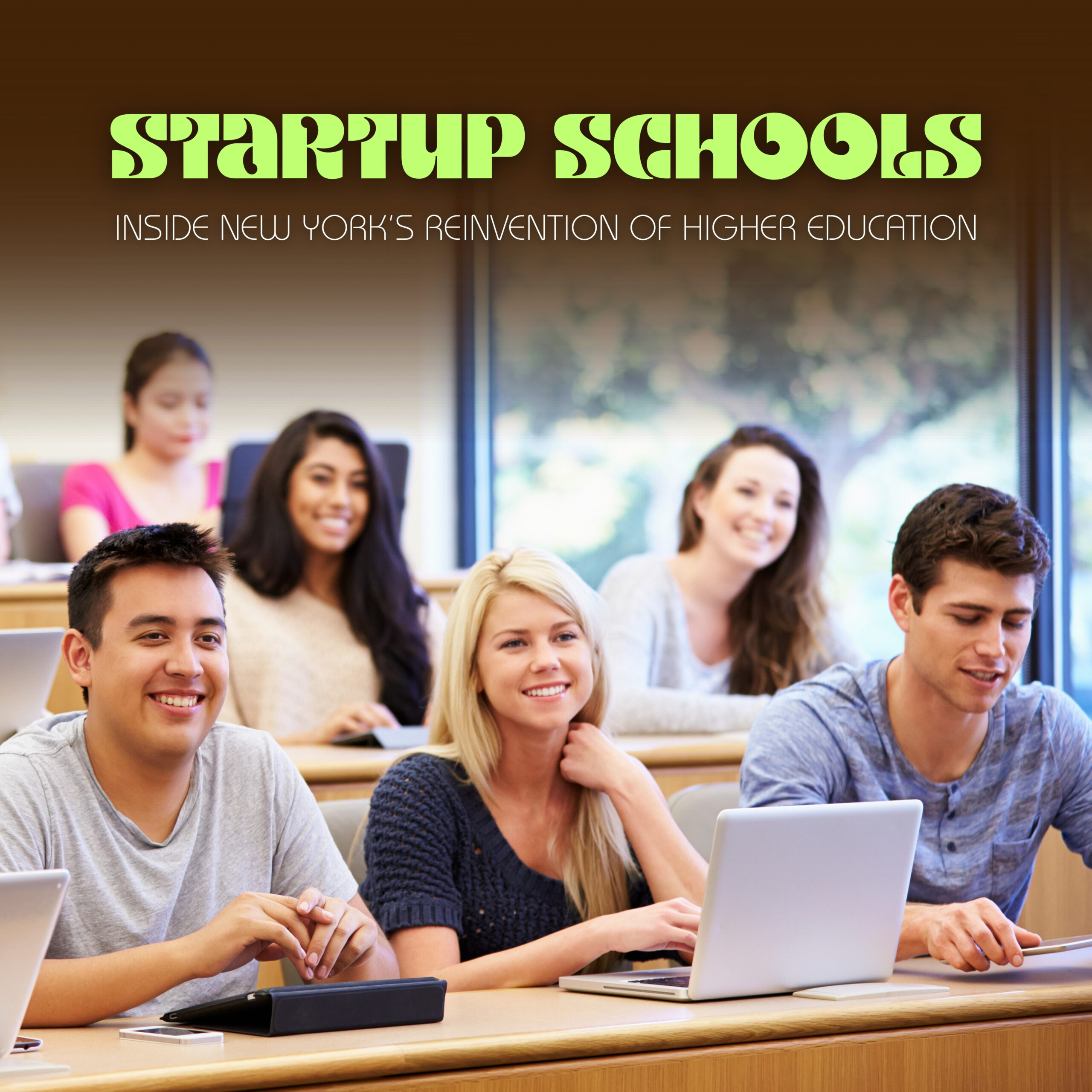
By From Startup Schools: Inside New York’s Reinvention of Higher Education
As tuition rises and traditional degrees lose their edge, New York is reshaping how learning works, from startup-style campuses to industry-driven classrooms.
The New Classrooms of New York
In a bright co-working space in Brooklyn, college looks nothing like the lecture halls of the past. Students huddle around whiteboards, coding apps, pitching ideas, and collaborating with real companies. There’s no long syllabus or semester system here — only projects, mentors, and outcomes.
This is not a startup incubator. It’s a school.
Across New York City, a quiet revolution in higher education is taking shape. The city that once defined finance and fashion now wants to redefine learning itself, faster, cheaper, and closer to the real world.
Why Change Was Needed
Traditional colleges have grown expensive and slow to adapt. In 2023, average student debt in New York State hit $37,000, according to the Federal Reserve Bank of New York. Meanwhile, employers say many graduates lack the practical skills needed in fast-changing industries.
The result? A growing mismatch between education and employment.
A Georgetown University report found that by 2031, nearly 70% of jobs in the U.S. will require more than a high school diploma. But not necessarily a four-year degree. That’s the gap New York wants to close.
So, the city began investing in “startup schools”, agile programs that blend technology, entrepreneurship, and skill-based learning.
From Midtown Towers to Maker Spaces
New York’s new education model is built on flexibility. Instead of long lectures and final exams, students learn through bootcamps, workshops, and live projects.
Institutions like the CUNY Tech Prep, Cornell Tech, and The New York Code + Design Academy have turned Manhattan and Brooklyn into living classrooms. These programs partner directly with tech firms, startups, and creative agencies, helping students gain skills that translate into jobs immediately.
“We call it the ‘learn-and-launch’ model,” says Dr. Aisha Raman, director at a Brooklyn innovation lab. “Students don’t just study. They build.”
The city is also pushing micro-credentials: short-term, skill-specific certifications recognized by major employers. Courses in AI, cybersecurity, and sustainability are topping enrollment charts.
The Cost Question
One of the biggest reasons behind this reinvention is cost.
According to the College Board, the average annual tuition at a private four-year college in New York now exceeds $42,000, not including housing. Public universities aren’t far behind when living expenses are added.
For many, math no longer works.
Startup-style schools, by contrast, charge far less. Some programs run as short as six months and cost under $10,000. Others, like CUNY’s Career Launch, are free for qualifying students.
By cutting overhead and focusing on practical learning, these programs make education accessible to a wider group, from recent high school graduates to mid-career professionals.
Learning That Works Like Work
The shift isn’t just about affordability, it’s about purpose.
Students now want education that leads somewhere tangible. Employers want candidates who can perform from day one. Startup schools blend both.
For instance, Cornell Tech runs studio courses where students team up with companies to solve real challenges, from urban planning to clean energy design. Similarly, NYU’s Tandon Future Labs pairs student innovators with investors to test new business models before graduation.
“It’s like running a startup while earning your degree,” says Carlos Mendes, a 24-year-old software engineer who completed a tech fellowship in Manhattan. “You don’t just learn theory. You launch something real.”
The Broader Impact on New York
The city’s education reinvention is not just a classroom story, it’s an economic one.
According to the NYC Economic Development Corporation, tech and innovation sectors in New York employ over 300,000 people and are growing faster than any other industry. To keep pace, the city needs a constant stream of skilled talent.
Startup schools feed that pipeline.
They also bring opportunities to communities left out of traditional systems. Programs like Per Scholas in the Bronx and CUNY ASAP help underrepresented groups enter tech, healthcare, and business fields, with placement rates above 80%.
“Education has to be a ladder, not a wall,” says Deputy Mayor Maria Torres, who oversees workforce development. “We’re not just reinventing schools, we’re reinventing access.”
Challenges on the Blackboard
Still, the new model faces hurdles.
Some educators warn that short-term programs risk narrowing learning too much.
“We can’t lose sight of critical thinking and creativity,” says Dr. Helen Zhou, education researcher at Columbia University. “Skills get you in the door, but ideas keep you there.”
Others question whether startup schools can scale without sacrificing quality. Funding remains uneven, and many programs rely on grants or private sponsorships.
The challenge is finding balance, combining the agility of startups with the depth of academia.
What Comes Next
The next wave of innovation may lie in hybrid models, blending traditional degrees with startup-style learning.
Colleges across New York are experimenting with this mix. CUNY now offers credit for project-based internships. NYU is testing a “modular degree,” where students can piece together certifications over time.
Tech companies are also getting in on the action. Google, Amazon, and IBM have launched their own learning academies in the city, offering recognized credentials alongside local universities.
The goal is clear: turn New York into the global capital of applied education, where learning meets labor, and classrooms feed careers.
My Opinion
New York has always been a city of reinvention, from its skyline to its street art. Now, it’s reimagining how people learn, earn, and build futures.
Startup schools won’t replace traditional universities overnight. But they’re offering something the old system can’t: speed, relevance, and access.
For a generation looking to learn fast, work smart, and pay less, the classroom of tomorrow might look a lot like a startup office today.
The question now: will this reinvention spread fast enough to keep New York, and its people, ahead of the curve?
Reporting by The Daily Newyorks Staff.